
Introduction
You already know RC cars sell. The harder question is which models move fastest off your shelves. Our team at JXC Model Technology sees the answer in the order data: off-road and crawler cars now take a bigger share of our exports every season. Buyers keep coming back to trucks that can leave the pavement.
Off-road RC covers buggies, trucks, and crawlers built for dirt, gravel, grass, and rocks. Customers like them because they work almost anywhere. A store can demo one on a ramp. A parent can run one in the backyard. A hobbyist can take it to a trail. That wide range of uses makes off-road models easy to sell.
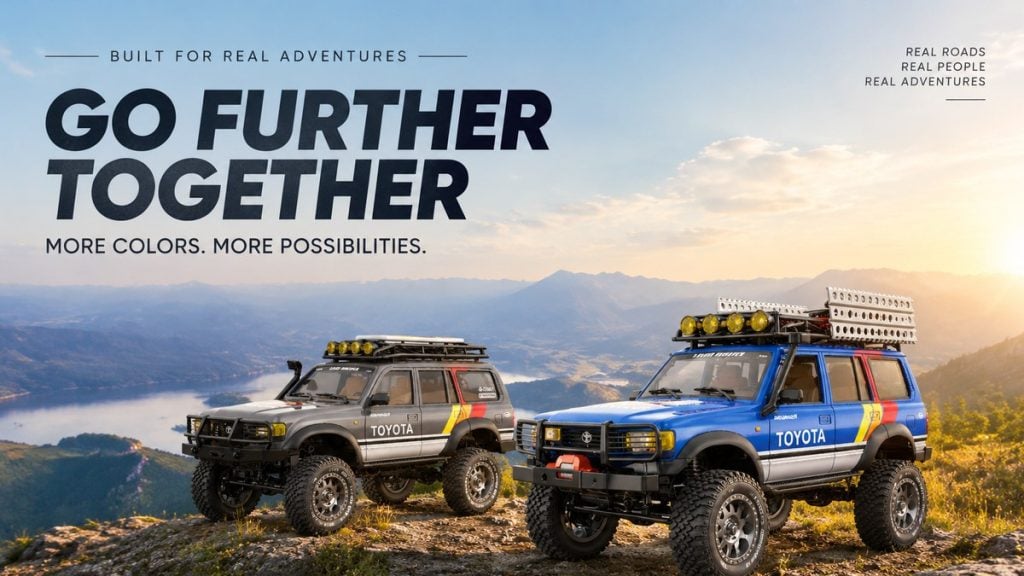
We build licensed off-road cars ourselves. Our 1:12 line now covers the Toyota Land Cruiser 80 crawler (LC1201) and the Land Rover all-terrain crawler (LR1201), and we ship both to distributors across Europe, the US, Japan and Australia. We have watched these buying patterns from the factory side for years. This guide explains the core hardware, who buys these cars, where they sell well, and what to check before you place a bulk order. By the end, you will know exactly what to ask any supplier, including us.
What Makes an RC Car “Off-Road”? Core Hardware Explained
An “off-road” label means little on its own. Four parts decide how a model handles rough ground: the drivetrain, the suspension, the tires, and the chassis. Learn these four, and you can judge any supplier’s car in a few minutes.
Start with the drivetrain. Most serious off-road models use four-wheel drive, or 4WD. Power reaches all four wheels, so the car keeps grip when one wheel slips. On a muddy slope or a loose rock, that grip means the difference between driving over and getting stuck. Many entry-level models use two-wheel drive. They cost less to make, but they stay on gentler terrain. For crawlers, buyers expect 4WD as standard.
Next comes suspension. Off-road cars need long wheel travel, the up-and-down movement of the suspension, plus shocks that absorb impacts. Cheap models bounce over bumps; well-built ones stay calm. When a child drives on grass or up a curb, shock quality decides whether the car stays fun or flips.
Tires do a lot of the work. Deep tread grips loose dirt, and large tires lift the body off the ground. In our experience, tires are the first part buyers touch in a store. A rugged wheel set instantly says “take me outside.”
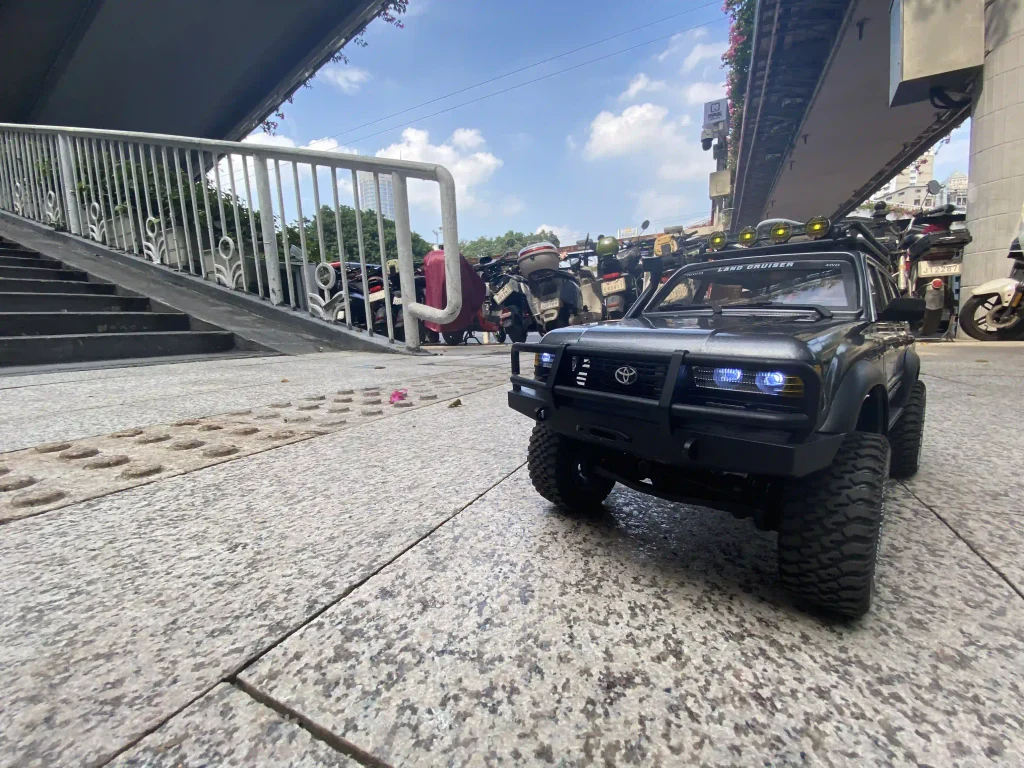
The chassis ties it together. A raised frame gives ground clearance, so rocks and roots pass under the car. Premium crawlers add portal axles, which lift the axle centerline even higher and change how the car clears a rock ledge instead of scraping over it. Our 1:12 LC1201 uses a portal-axle chassis that we spent 14 months redesigning. It measures 412.35 × 191.42 × 230.67mm and weighs about 2,930g — real presence on a shelf without the freight bill of a 1:10 truck. During that redesign we learned how much small parts matter: a stronger gear or a better shock seal decides whether a car survives a drop off a curb.
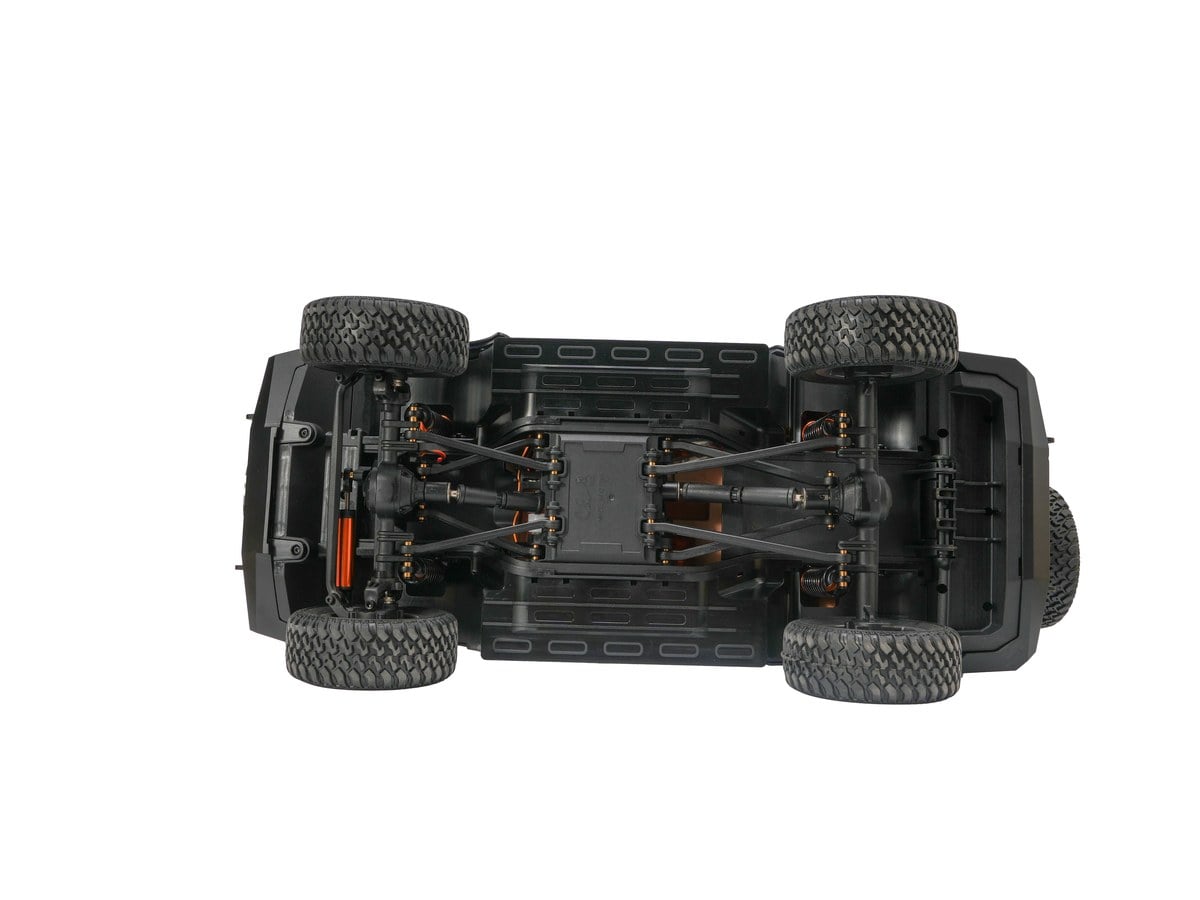
| Part | What It Does | Why Retailers Care |
|---|---|---|
| 4WD drivetrain | Sends power to all four wheels | Runs on grass, dirt and slopes |
| Long-travel suspension | Soaks up bumps and drops | Smooth drive feel, less bounce |
| Deep-tread tires | Grips loose dirt and rocks | Looks tough, handles outdoors |
| Raised chassis | Lifts the body over obstacles | Clears curbs, roots and stones |
| Strong gears | Resists wear under load | Fewer breakages, fewer returns |
When a supplier sends a spec sheet, check these four lines first. If the numbers look thin, the car will probably drive thin too.
Who Actually Buys Off-Road RC Cars?
Your customers fall into three clear groups, and each one buys differently. Knowing the mix helps you stock the right models and explain them to shoppers.
Gift buyers come first. Parents and grandparents pick off-road cars because they work outdoors. A kid can run a truck in the park, on the beach, or in the yard without a track. These buyers want durable models with simple controls and honest battery life. One UK distributor told us his best-selling gift line is a 1:12 licensed crawler, because parents recognize the car shape and kids love the big tires.
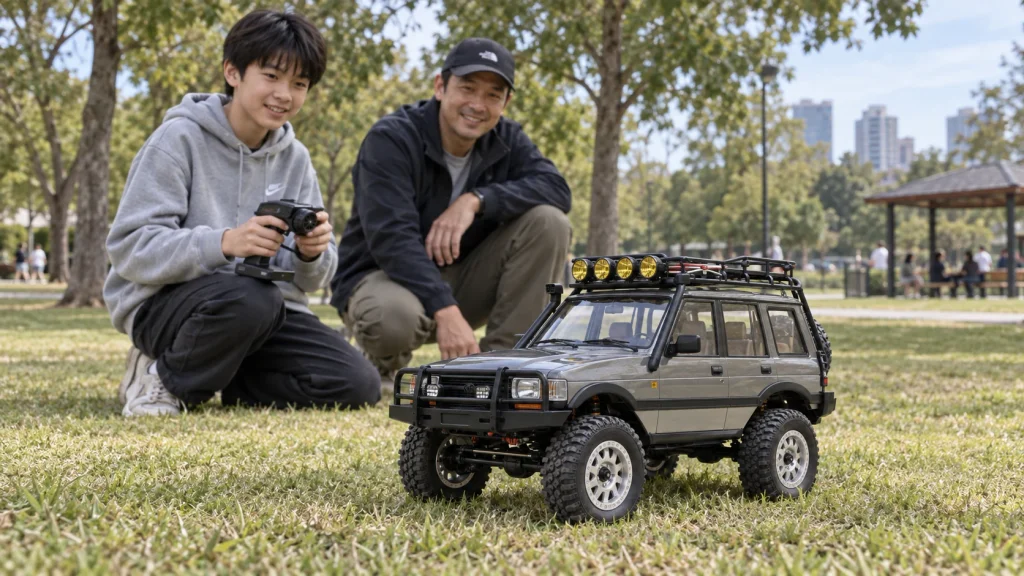
Hobby buyers form the second group. Teens and adults treat off-road cars as a hobby, not a toy. They join crawler clubs, swap parts, and upgrade shocks, tires, and motors. This group buys again and again, which feeds your spare-parts sales. They also post videos of their cars, and that gives your store free promotion.
Collectors make up the third group. Licensed bodies draw them in. A Toyota LC80 or a Land Rover-shaped crawler carries the same nostalgia as a die-cast model, but it drives. These buyers will pay more for a genuine licensed shell with clean details.
Channel matters too. Hobby and model shops sell more premium crawlers to adults. General toy stores sell more entry trucks and buggies to families. If you serve both, a mixed order spreads your risk. That is why JXC supports mixed-batch orders across the LC80 crawler and our drift line in one shipment. In our exports, demand for off-road models runs strong in Europe and North America, and it grows fast in Australia and the Middle East, where open space is easy to find.
Retail Strengths (and Weak Spots) of Off-Road RC
Strengths first. Off-road cars demo well. Place a small ramp or a pile of rocks near the shelf, and the car sells itself. Nothing in the RC aisle catches a child’s eye like a truck climbing over an obstacle.
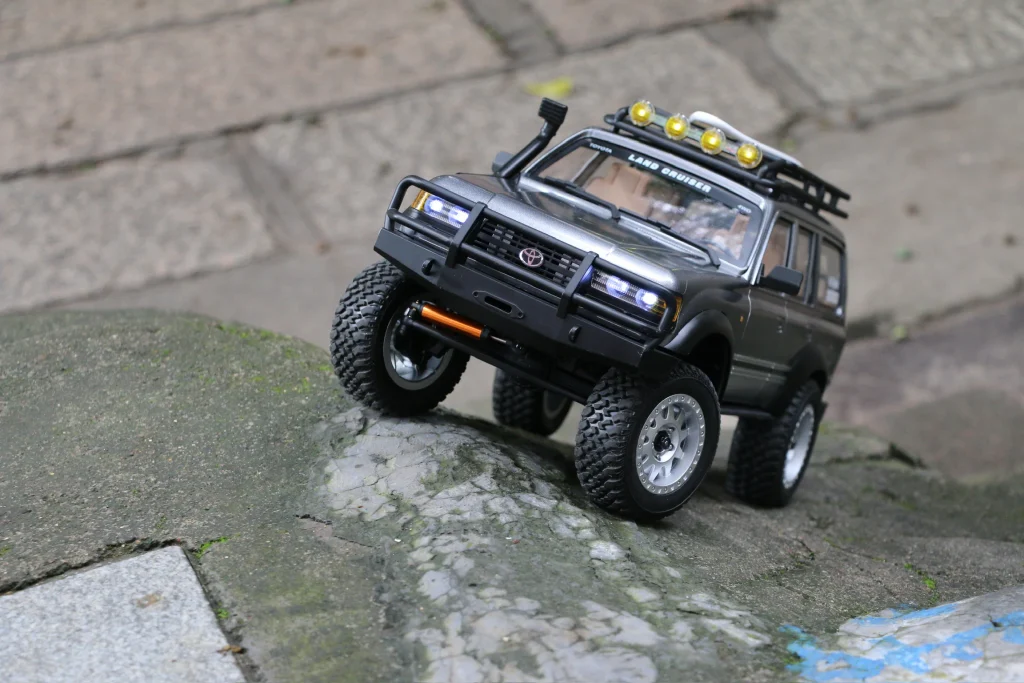
They also carry a higher ticket. Off-road models, especially crawlers, justify bigger price tags than basic buggies, which lifts your average sale. Durability matters at retail too. A car built for rocks survives rougher play, which means fewer breakage complaints and fewer returns. Add spare tires, shocks, and gears at the counter, and each sale grows.
Social media gives another boost. Crawler videos perform well because they show real action. One of our distributor partners filmed a 30-second LC80 climb and turned it into a post that sold out his first batch. You do not need a studio for content like that.
Now the honest weak spots. Off-road boxes are bigger than drift-car boxes, so shipping and storage cost more, especially for online orders. The cars need demo space in a store to show their value. And rough play creates real wear, so quality control and spare parts matter more here than in any other RC category.
Know these trade-offs before you buy. Bigger products need smarter logistics, and the quality bar sits higher. Work with a factory that tests for rough use, and the weak spots shrink fast.
Why JXC 1:12 Crawlers Cost Less Than Brand-Name Off-Road RC
Price decides who stocks a line and who walks away. So let us answer the cost question plainly: our factory quotes for the LC1201 and the LR1201 come in well below the distributor-level pricing you pay for comparable licensed 1:12 crawlers from established hobby brands.
The reason is structural, not seasonal. We are the factory, so nothing sits between our line and your warehouse. No importer. No regional distributor. No brand-licence middleman taking a cut. On a licensed crawler, that stack of intermediaries is exactly where the price gap lives. Remove it, and the same physical car reaches you at a lower cost before it ever leaves Shenzhen.
That saving does not come from thinner parts. Our 1:12 platform is shared: the LC1201 and the LR1201 run the same drivetrain architecture and the same 7.4V 18650 power system, so mould and tooling cost spreads across two licensed bodies instead of one. We buy 40A brushed ESCs, 2.4GHz radio sets and metal gear sets in volumes a trading company cannot reach. Scale is the discount.
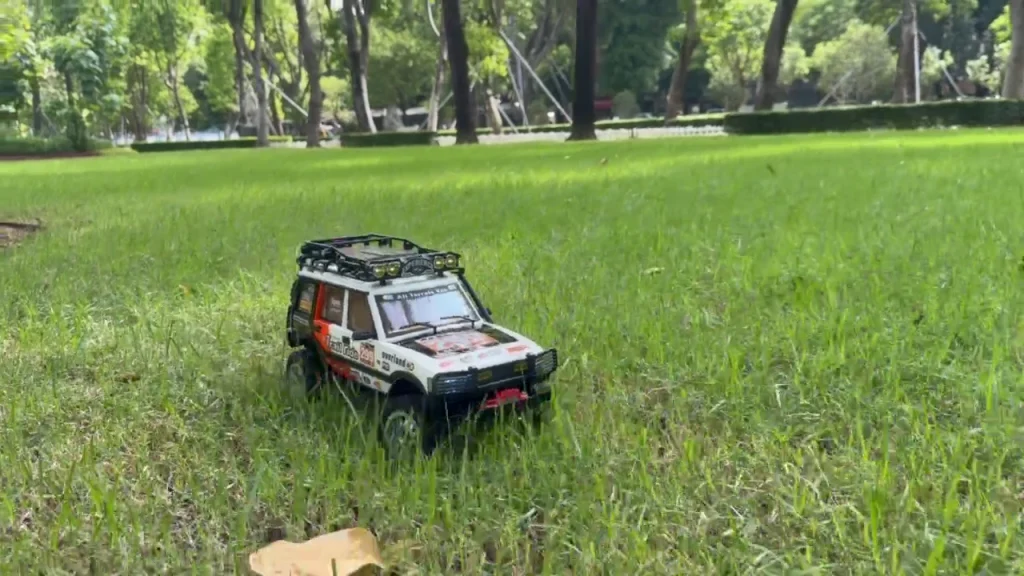
Then look at what the money buys. Both cars are 1:12, four-wheel drive, 412.35 × 191.42 × 230.67mm and around 2,930g, with oil-filled shocks, metal gears where load is highest, headlights and turn signals, and a USB charging port. The LC1201 adds a two-speed mechanical shift and the portal-axle chassis. The LR1201 1:12 Land Rover crawler comes in a brushed version and a brushless version, both officially licensed.
Ready-to-run changes the math as well. Every unit ships with the battery, the charger, the 2.4GHz transmitter and the manual in the box, and larger orders include a starter spare-parts pack. Buy a comparable car from a hobby brand and those items often land on your invoice separately. Compare landed cost per sellable unit, not the headline price.
What you do with the gap is your decision. Keep it as margin, or price under the brand sitting next to you on the shelf and take the volume. Either way, you are not the one absorbing the difference. Send us your market and target quantity, and we will put current factory pricing for both crawlers next to our certificate list.
Core QC Checks Before You Order Off-Road RC
Quality separates a best-seller from a return pile. Before you sign a purchase order, walk through these six checks.
Radio and electronics. Confirm the model uses 2.4GHz, which stops interference when several cars run together. Ask about the servo, the motor, and the speed controller. If the supplier claims waterproof parts, ask for the test record.
Drivetrain and gears. Ask what material the gears use. Nylon gears cut cost; metal gears last longer under load. Ask for a test video of the car climbing a steep ramp and running on grass for 10 minutes without stopping.
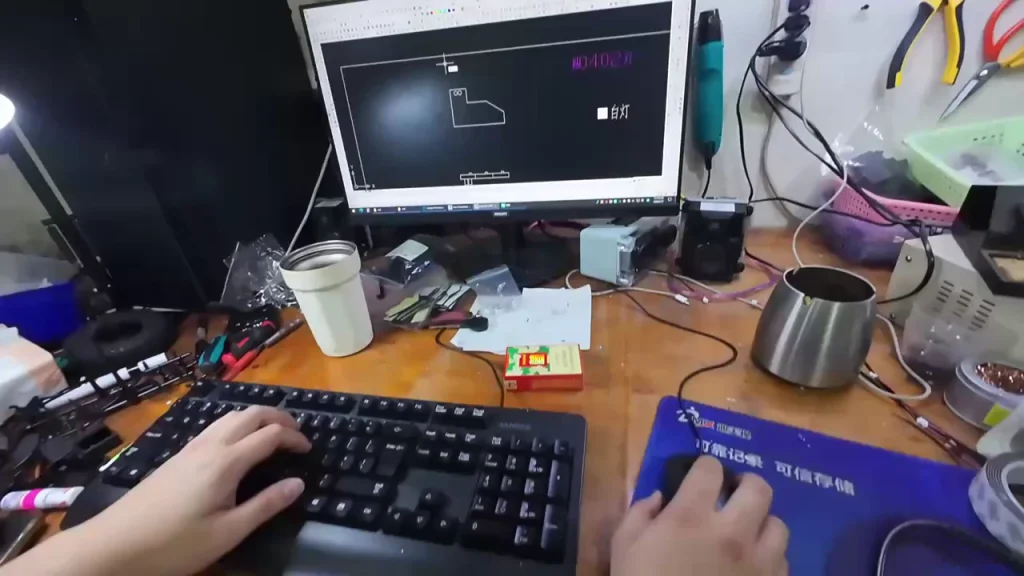
Suspension and shocks. Oil-filled shocks should not leak after hard runs. In our factory, we run sample cars from every batch over a test ramp and through a 30-minute battery session. We check for leaks, loose screws, and strange noises.
Tires and wheels. Wheels should arrive glued and balanced. A wobbly tire feels broken to a customer on day one.
Battery and certificates. Battery cells must carry the right marks for your market, such as CE and UN38.3 for lithium cells. The whole toy needs the certificates your country requires, like ASTM F963 and FCC in the United States or EN71 and RoHS in Europe. Missing paperwork can stop your container at customs.
Spare parts. Ask for the parts list before you order. A supplier with real stock of shocks, gears, tires and bodies lets you fix units locally instead of shipping them back to China. We keep full spare parts for the LC1201, the LR1201 and the rest of our line, so a broken car becomes a repair instead of a refund.
Ask for three documents before you commit: test videos, certificate copies, and a spare-parts list. Any serious factory will share all three. If a supplier hesitates, treat that as a warning sign.
What You Get Beyond the Car: Built for Distributors
Off-road RC is a line you build over seasons, not a single purchase. Anything that slows a reorder or a warranty claim costs you more than a few cents on the unit price. That is where a distributor-focused factory separates itself from a supplier who only quotes a number.
Start with order flexibility. You do not have to commit a container to one model. Our MOQ is flexible and mixed batches are standard, so a first order can combine the LC1201, the LR1201, a Mitsubishi Delica 1:24 crawler and a Supra drift car in one shipment. Most partners run a scale mix — 1:24 for entry price points, 1:12 for the hero slot on the shelf. If you are still deciding where 1:12 sits in your range, our RC car scale chart breaks down every size from 1/43 to 1/12.
OEM and ODM are open to you. We print your logo on the body and the carton, redesign packaging, and adjust the manual for your market. E-commerce sellers use this to build a private-label line while keeping factory pricing behind it.
Compliance is not an upsell. We hold CE, EN71 and RoHS for Europe, CPC, ASTM F963 and FCC for the United States, TELEC for Japan, and UN38.3 for the lithium cells, with ISO 9001 behind the factory process. We match the certificate pack to your destination and send the files to your broker before the container ships.
After-sales decides your repeat rate. We stock spare parts for every model we sell — shocks, gears, tires, bodies and gearboxes — so your team repairs a customer instead of refunding one. One distributor told us his previous supplier could not supply a single spare gearbox, and he refunded 12 cars in a month. That is what a missing parts shelf costs.
You also get a contact who knows the models, the current lead times and the paperwork. And you get the assets to launch: product photography, action video, carton renders and spec sheets you can drop straight into your listings. Distributors who moved the LC1201 filmed it climbing a ramp. In this category, that is the cheapest content you will ever produce.
What is the difference between an off-road RC car and a crawler?
Off-road is the wide category: buggies, trucks, and crawlers that run off pavement. A crawler is a slower off-road car built for precise driving over rocks and steep terrain. Crawlers usually have 4WD, high clearance, and low-speed control. If a store wants one hero off-road product, a crawler is often the safest bet.
Do off-road RC cars have to be four-wheel drive?
Not always. Many entry buggies and trucks use two-wheel drive and still sell well to younger kids on flat ground. For climbing, grass, and rough trails, 4WD makes a real difference. Match the drivetrain to the buyer: 2WD for low-price entry gifts, 4WD for crawlers and outdoor use.
Are off-road RC cars too big for online selling?
Bigger boxes mean higher shipping cost, so check the numbers before you list. Mid-size models balance presence and freight. For online sellers, compare per-unit shipping against the retail price; for stores, the display size earns its space. Many of our distributors sell the LC80 in-store and online by choosing shipping-friendly packaging.
Which certificates should I check for off-road RC?
Ask for the certificates for your market: ASTM F963 and FCC for the United States; CE, EN71, and RoHS for Europe; plus UN38.3 for lithium batteries almost everywhere. A factory that exports widely will send copies without delay. We hold these certificates across our licensed line and share them with buyers before shipment.
How do I check quality before a bulk order?
Order samples first and run them hard: grass, ramps, curbs, and a full battery cycle. Watch for shocks that leak, gears that strip, and tires that wobble. Ask the factory for batch test videos and its inspection report. Then start with a smaller order to confirm the mass production matches the sample.
How much less do JXC crawlers cost than brand-name RC cars?
Less than distributor-level pricing on a comparable licensed 1:12 model, because you buy at factory level with no importer or regional distributor in between. The exact gap depends on your volume, your market, and the version you choose — brushed or brushless, carton design, logo printing. Ask for a quote on the LC1201 or the LR1201 and compare it with the last price you paid for a similar licensed crawler. We send the pricing tiers together with the certificate list, so the comparison stays like for like.
What is the MOQ for the LC1201 and the LR1201?
MOQ is flexible on both, and first orders can mix models. Most new distributors start with a batch of 40 to 80 units, confirm sell-through, then reorder deeper on what moves. Tell us your target market and we will confirm the schedule and the price tier before you commit.
Get the Off-Road RC Checklist and Factory Pricing
You now know the hardware, the buyers, the trade-offs, and the QC checks. The next step is simple: get the checklist in your hands.
Use the contact form on our website at www.jxcmodel.com and write “off-road checklist” in your message. We will reply with the Off-Road RC Buying Checklist PDF. It covers the six QC checks, the certificate questions, and a spec-sheet comparison table you can reuse with every supplier.
We will also include the current LC1201 and LR1201 catalogs and the full certificate list, so you can compare us against any factory. When you are ready to talk numbers, you can check our home page which covers MOQ, OEM options and payment terms. No pressure to order. Take the checklist, test your suppliers, and come back when you are ready. If the LC1201, the LR1201 or another licensed model fits your market, tell us your country and target quantity, and we will send factory pricing.