
Table of Contents
Why We Rebuilt the 1:12 Crawler Chassis from the Ground Up
Every portal axle RC crawler starts as a complaint about the one before it. When we first launched our 1:12 scale LC80 Toyota Land Cruiser and Land Rover models, we heard the same feedback from hobby shops, distributors, and end users: the body shells look great, but the chassis holds the car back. The old version used a solid axle design with limited ground clearance. The springs were too stiff. The 370 motor struggled on steep rocks. And almost none of the parts could swap with standard hobby-grade components.
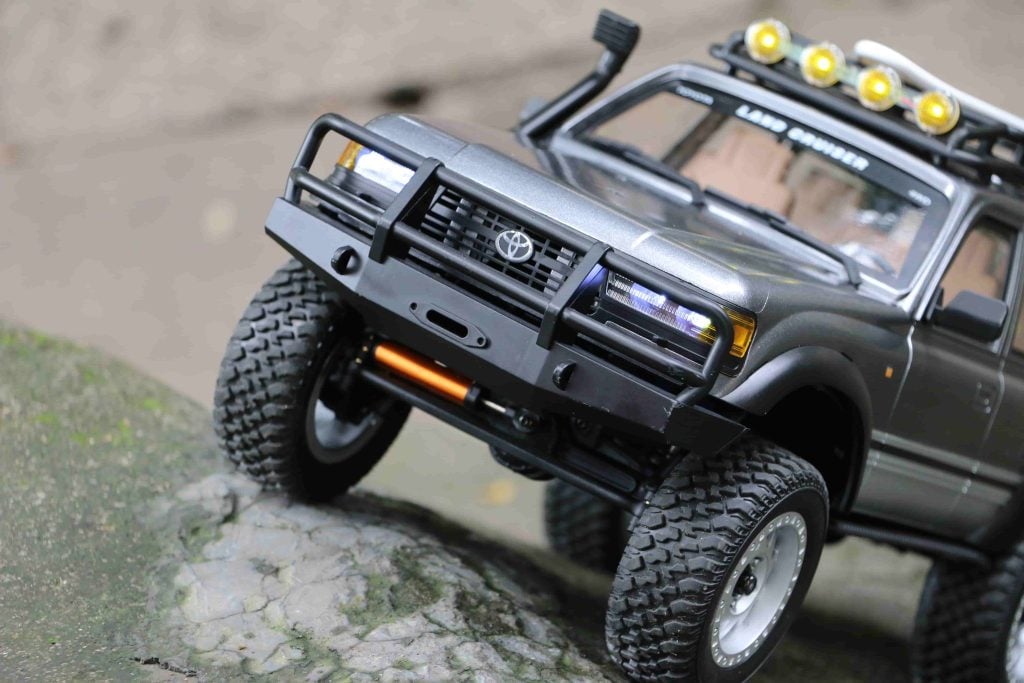
So we went back to the drawing board. After 14 months of testing, we rebuilt the entire chassis with a portal axle design, long-travel suspension, standard hobby electronics, and 36 bearings throughout the drivetrain. The result? A crawler with better climbing performance from the start and room to replace or adjust key components. In this article, we explain what changed and why it matters, and how it changes the play experience.
Old vs New: What We Changed and Why
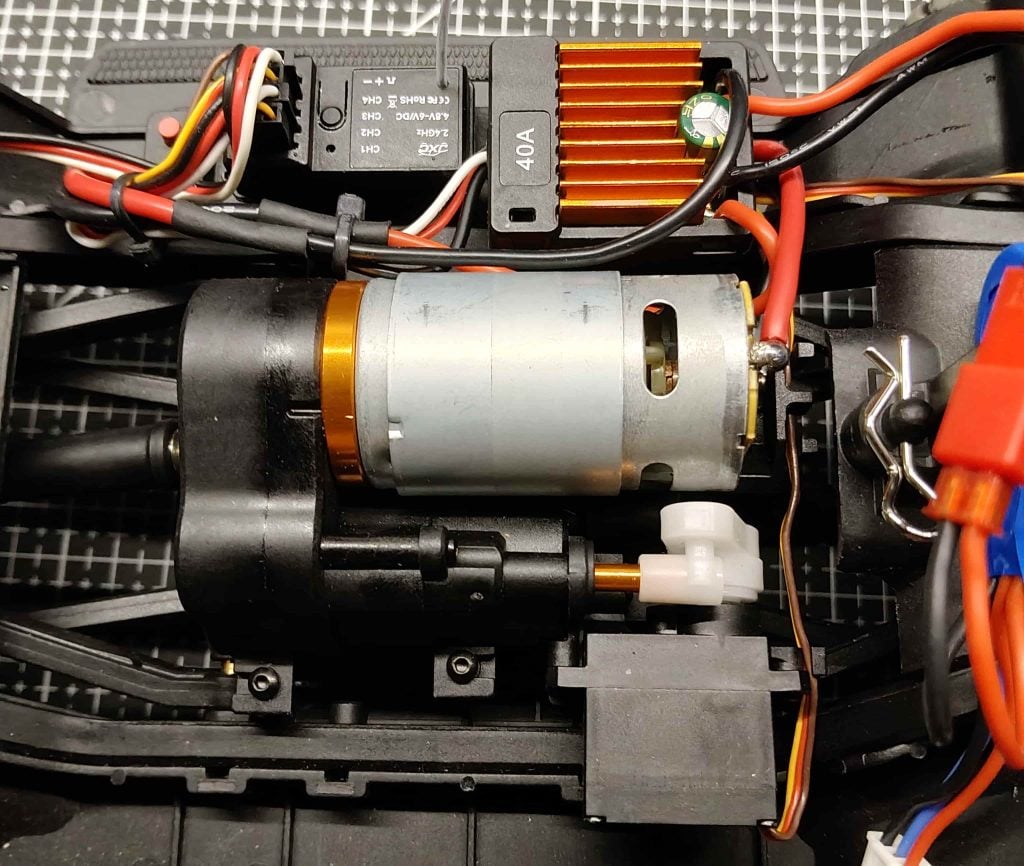
The biggest difference between the old and new chassis is the axle design. The old version used a straight axle (live axle) layout. It was simple and cheap, but ground clearance was poor. The belly pan scraped on rocks. The articulation range was limited, so the car struggled to keep all four wheels on the ground over uneven terrain.
Old Chassis Problems
| Component | Old Version | Problem |
|---|---|---|
| Axle | Straight axle (live axle) | Low ground clearance, poor terrain clearance |
| Motor | 370 size motor | Not enough torque for steep climbs |
| Shocks | Short spring shocks | No damping, short travel, no rebound control |
| Electronics | Integrated toy-grade board | Cannot upgrade ESC, receiver, or servo |
| Bearings | Bushings (no bearings) | Friction-heavy, rough drivetrain feel |
| Parts compatibility | Proprietary sizes | No aftermarket parts fit |
New Chassis Solutions
| Component | New Version | Improvement |
|---|---|---|
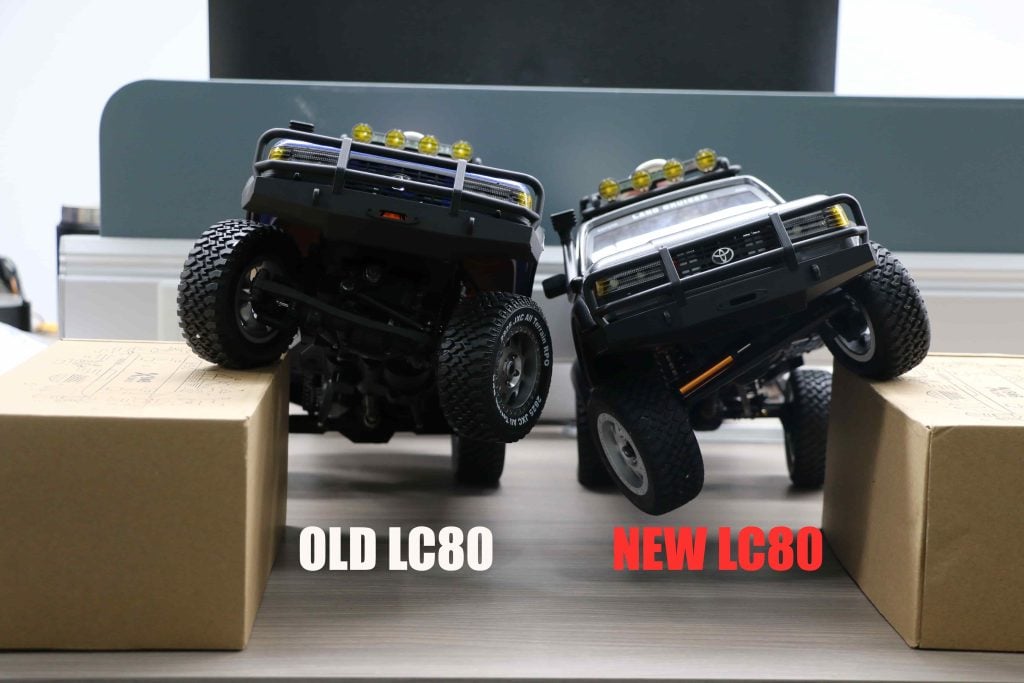
| Axle | Portal axle design | Higher ground clearance, better crawl angles |
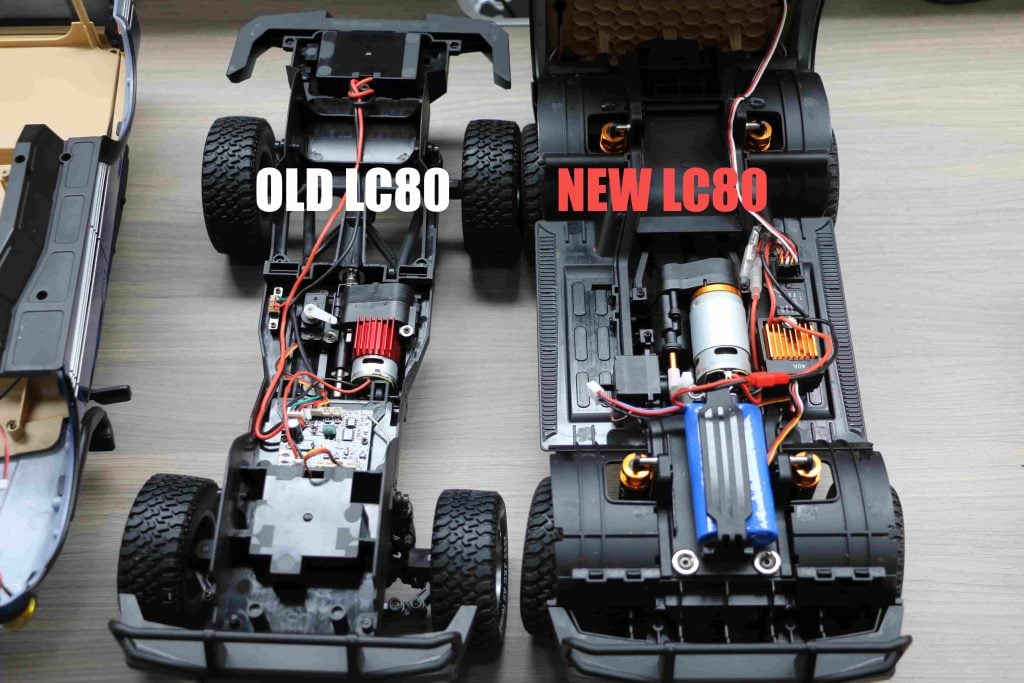
| Motor | 390 size (brushed) or brushless option | Stronger torque, smoother power delivery |
| Shocks | 9-hole adjustable oil-filled | Tune ride height, damping, and spring rate |
| Electronics | Standard hobby-grade (separate ESC, receiver) | Full upgrade path for all electronics |
| Bearings | 36 sealed bearings | Smooth drivetrain, less wear, better efficiency |
| Parts compatibility | Standard hobby interfaces + metal upgrade points | Works with aftermarket parts |
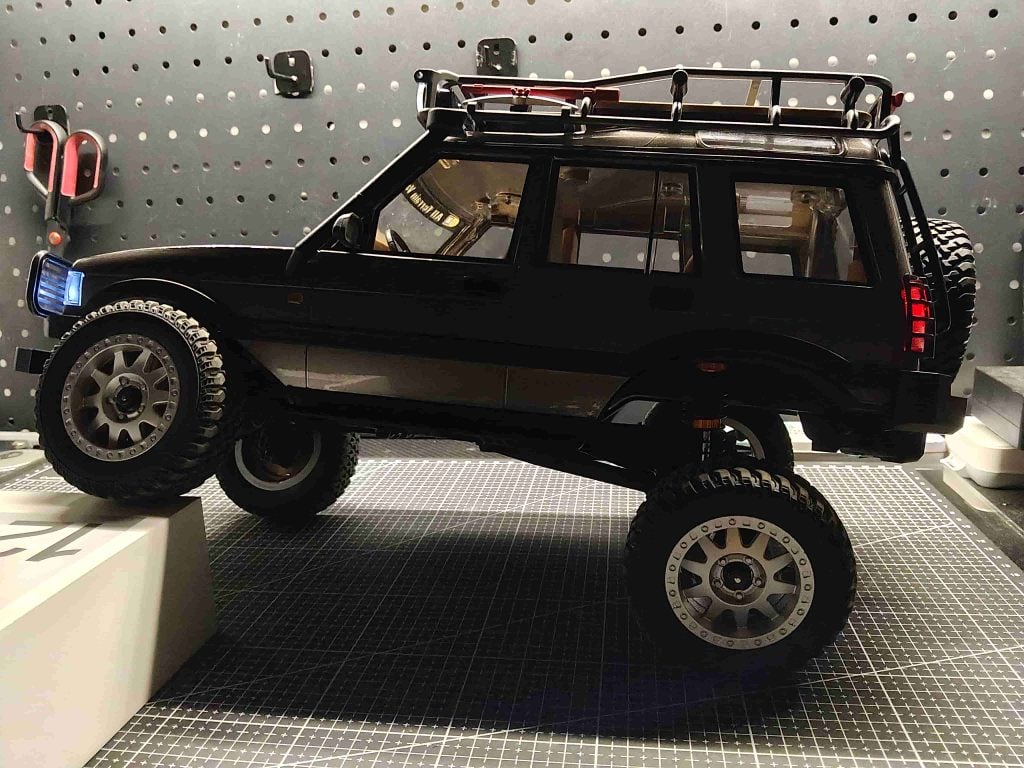
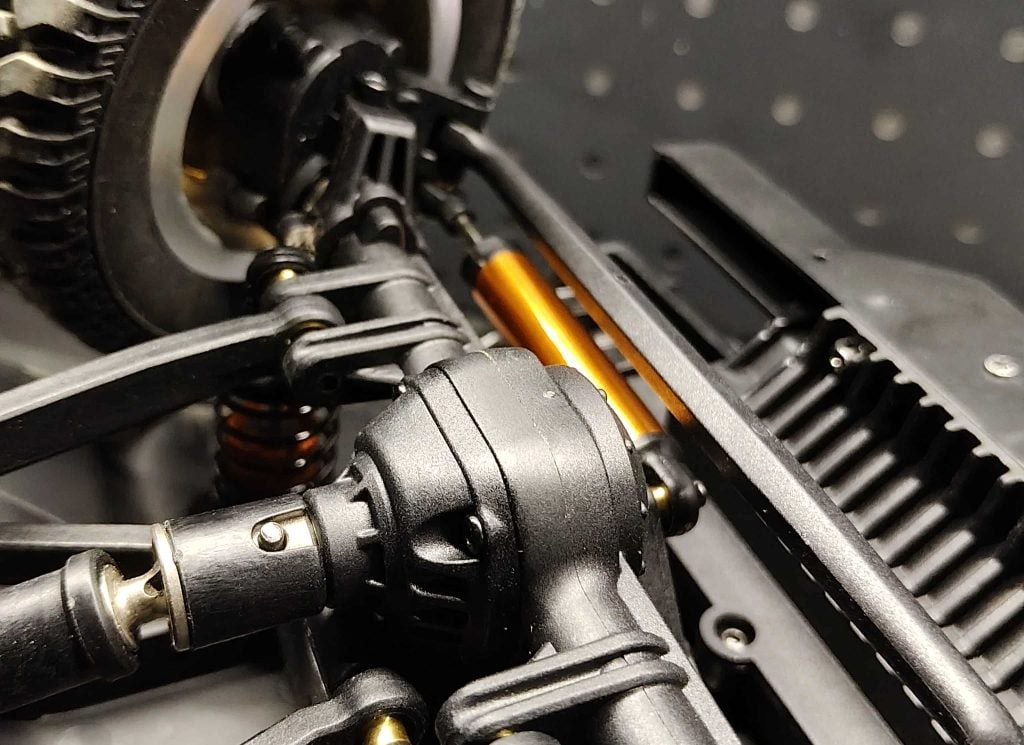
The portal axle is the main change. By mounting the axle shafts above the wheel centerline, we raised the ground clearance without needing oversized tires. The trade-off is a small loss in drivetrain efficiency, but for a crawler that spends its life on rocks and rubble, the extra clearance is worth this trade-off.
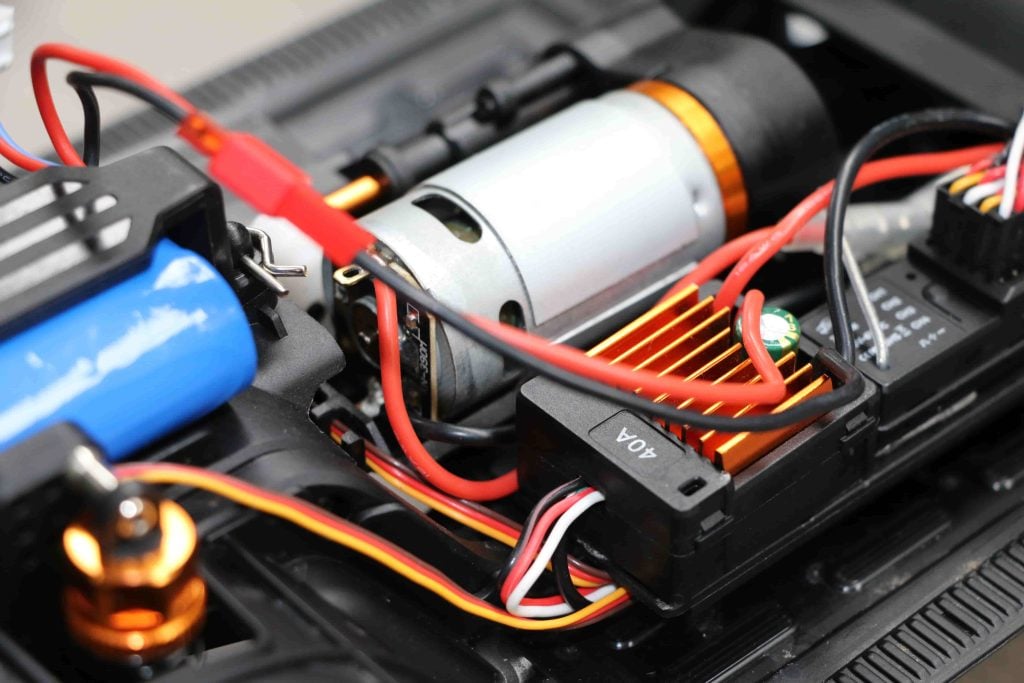
We also added a thermal saver structure integrated into the chassis. This helps dissipate heat from the motor and ESC during long crawling sessions. On hot summer days when the car is working hard on steep inclines, heat buildup is the number one cause of electronics failure. The thermal saver keeps critical components running cooler and extends their lifespan.
The compact ultra-low gearbox design sits below the chassis floor without reducing ground clearance. We spent three prototype iterations getting the gear case shape right so it tucks up into the frame rails cleanly. This protects the drivetrain from rock strikes and keeps power delivery smooth from the motor to the wheels.
Suspension: 9-Hole Adjustable Oil-Filled Shocks
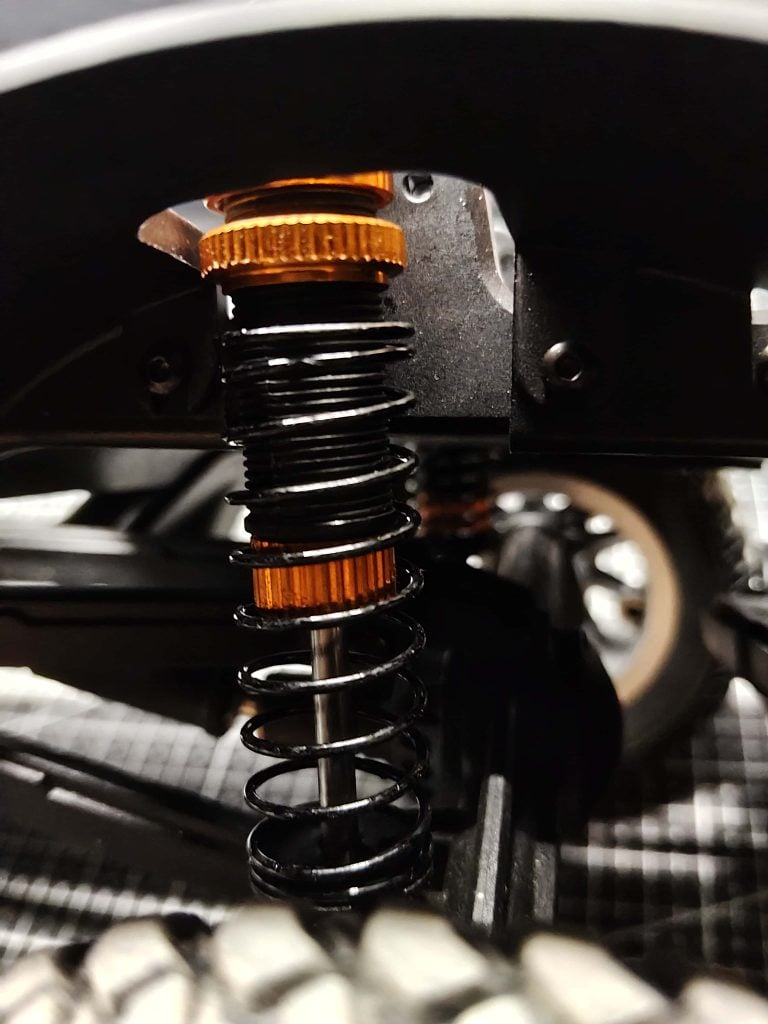
The old shocks were basic spring units with no oil damping. They were short, stiff, and had zero rebound control. Hit a rock at speed, and the car would bounce uncontrollably. The new oil-filled shocks add damping and more suspension travel.
Nine-Position Adjustment Ring
Each shock absorber has a nine-hole adjustment ring. By moving a screw down one hole, you raise the ride height. You can adjust up to four holes from the baseline, giving you a wide range of ride height options. For technical crawling on jagged rocks, raise it up. For high-speed running on flat ground, lower it for better stability. This lets users choose a setup for different terrain.
Oil-Filled Damping
The shock bodies are hollow and designed to be filled with damping oil. Each car ships with 100-weight low-viscosity oil, but you can swap in any standard hobby shock oil from 30W to 500W depending on your preference. Heavier oil means slower rebound and more stability on rough terrain. Lighter oil means faster response and better jump landings.
Combined with the long-travel suspension arms, the new setup gives you articulation that keeps all four wheels planted on uneven surfaces. We tested on 45-degree rock piles, and the new chassis maintained contact with all four tires where the old version would lift a wheel and lose traction.
The multi-position shock mounting points add another layer of tuning. By moving the shock top mount to a different hole on the tower, you change the spring rate and ride height in seconds. No tools needed beyond a hex wrench. These adjustment points are included on every car from the factory.
Power System: Brushed and Brushless Options
We offer two motor options to match different player levels and budgets.
Brushed Version (390 Motor)
The standard version uses a 390-size brushed motor. It delivers solid torque for casual crawling and trail running. The price point is friendly for entry-level buyers who are just getting into the hobby. If you are a distributor targeting first-time buyers or toy stores, this is the version to lead with.
Brushless Version (Recommended for Enthusiasts)
The brushless version delivers stronger, smoother, and more consistent power. Brushless motors last longer because there are no brushes to wear out. They run cooler and handle sustained high-load crawling without overheating. For experienced hobby users, the brushless version offers more power and smoother control.
Both versions use standard hobby-grade electronics. The ESC, receiver, servo, and transmitter are all separate components, not an integrated toy board. This means players can replace any single component without replacing the whole system. Want a faster servo? Swap it. Need a higher-current ESC for a bigger motor? Drop one in. Owners can replace the ESC, receiver, servo, or motor separately.
Battery and Runtime
| Spec | Details |
|---|---|
| Standard battery | 7.4V (2S) LiFePO4 (lithium iron phosphate) |
| Runtime | ~30 minutes normal use (shorter in extreme heat or rain) |
| Max supported | 11.1V (3S) battery |
| Safety warning | Do NOT use 14.4V+ — will burn out electronics |
| Battery position | Front-mounted for better weight distribution on climbs |
| Battery compartment | Extra space for larger capacity packs |
We switched from standard lithium-ion to LiFePO4 (lithium iron phosphate) batteries. LiFePO4 is safer, more stable at high temperatures, and easier to ship internationally. The battery compartment is sized to fit larger aftermarket packs, so players who want longer runtimes can drop in a bigger battery without modification.
Structural Design: 36 Bearings, Metal Servo, and Replacement Options
36 Sealed Bearings Throughout
The old chassis used plastic bushings at every pivot point. The result was a gritty, high-friction drivetrain that wore quickly. The new chassis uses 36 sealed bearings at every rotating and pivoting location. This reduces rolling resistance and gives the drivetrain a smoother feel.
Metal Gear Servo with Servo Saver
The steering servo is a 20-gram unit with metal gears, rated at 6kg of pulling force (tested at approximately 2kg in real-world conditions). More importantly, we added a hydraulic Servo Saver mechanism that absorbs impact forces and protects the servo gears from damage during hard landings or collisions. This servo protection also helps during hard landings and collisions.
Metal Rod Linkage System
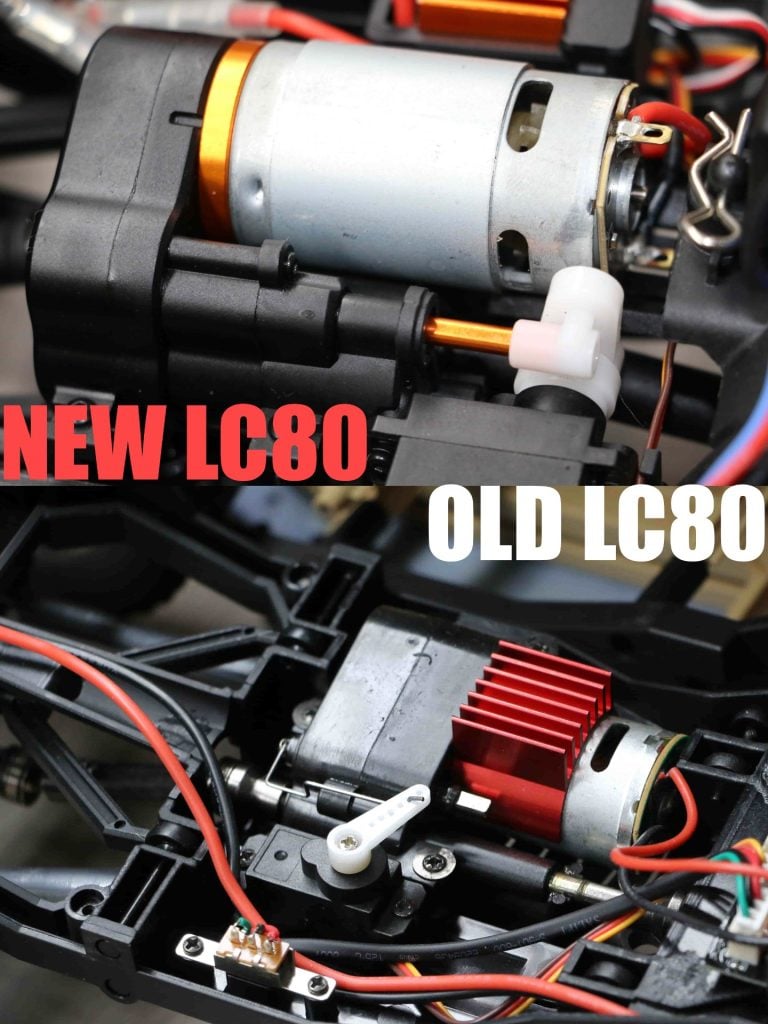
We replaced the old wire cable linkage system with solid metal rods for the gear shift and steering linkages. Metal rods are more precise, more durable, and give the car a mechanical, engineered feel that hobbyists appreciate. The high-low gear shift is more stable and positive in engagement.
Magnetic Body Shell
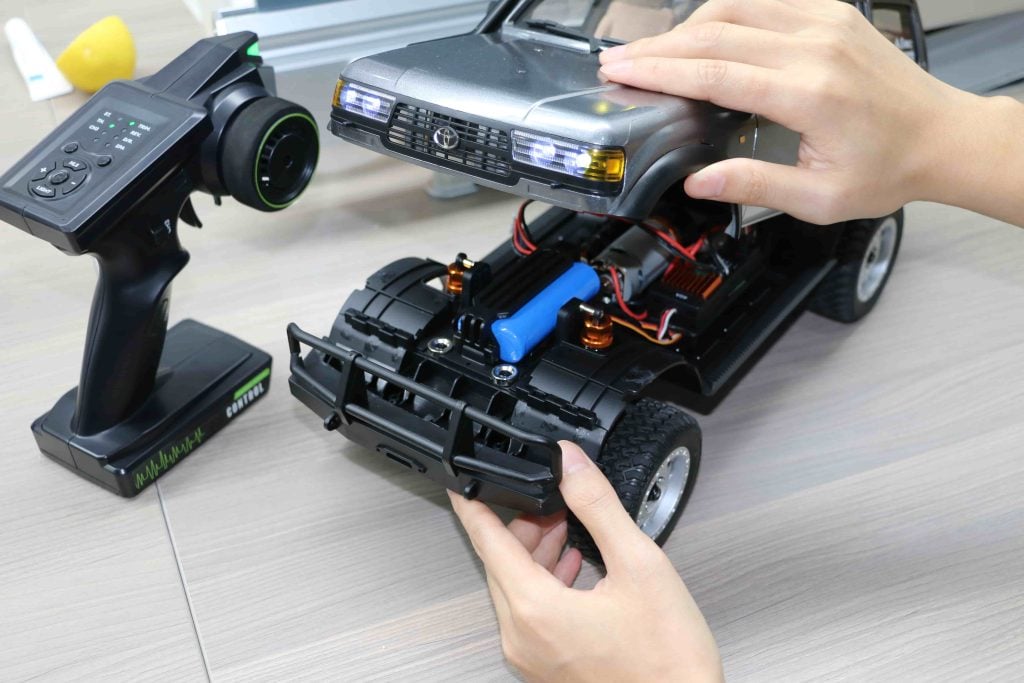
The body shell attaches with magnets instead of body clips. Pop the shell off in two seconds to access the battery, electronics, and drivetrain for maintenance or upgrades. No more fumbling with tiny clips in the field.
Wheels, Weight, and Appearance Changes
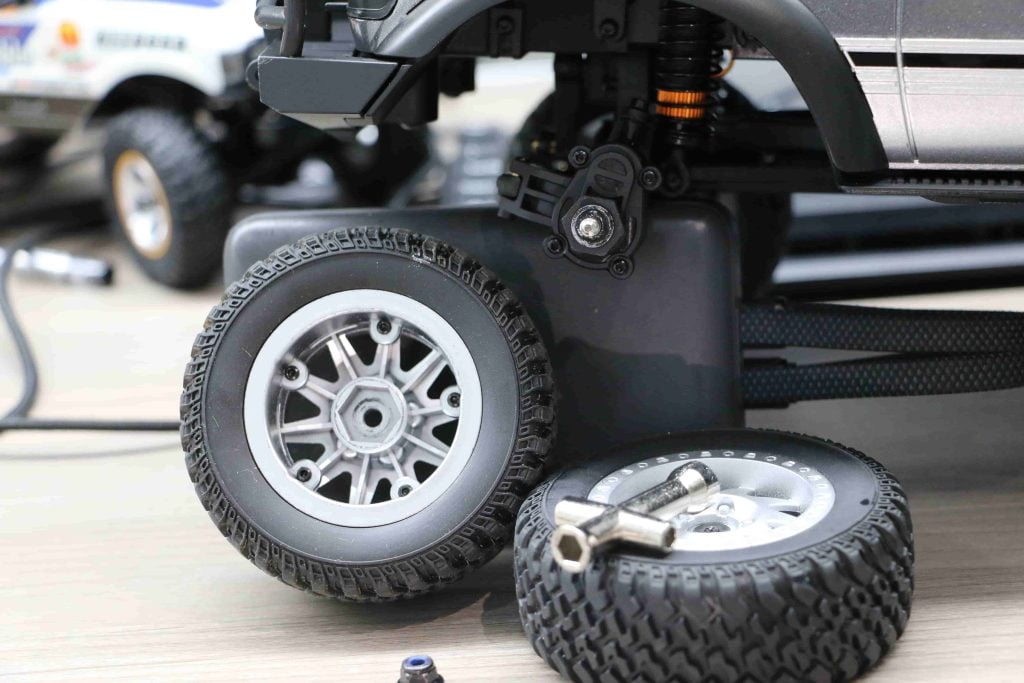
Weighted Wheel Hubs
The wheel hubs have built-in weight slots. Weighted hubs lower the center of gravity, which improves stability on side hills and reduces rollovers. Players can add the included weights, buy aftermarket weights, or use third-party beads and strips for custom tuning. In our testing, weighted hubs reduced the turning radius compared to unweighted wheels in the same class.
Detailed Body and Functional Spare Tire
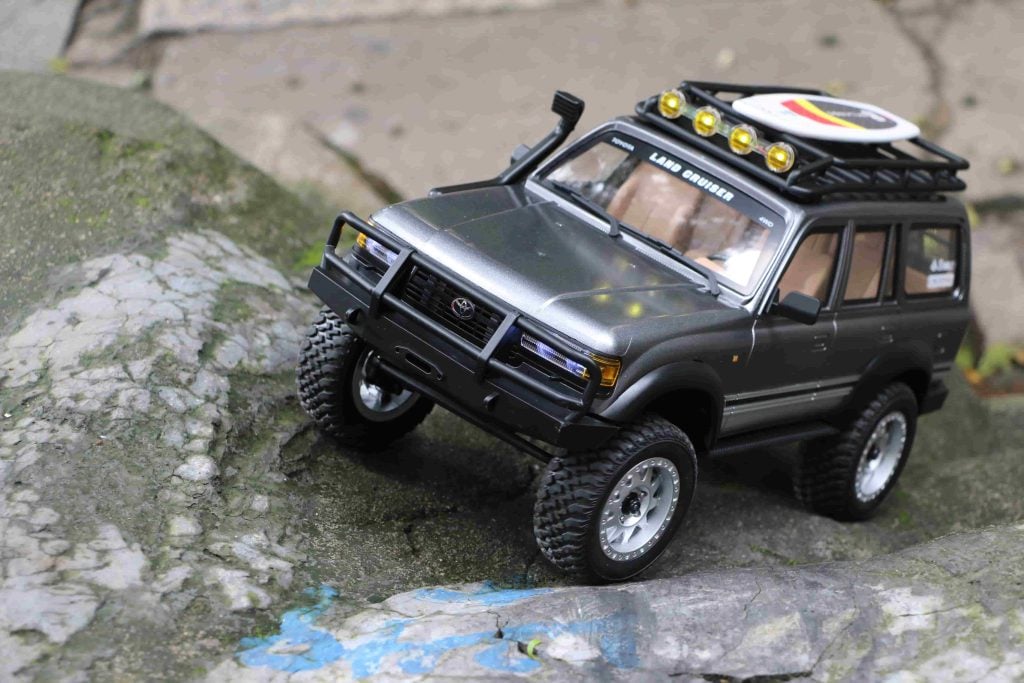
The LC80 body features molded panel lines, textured surfaces, and factory-applied paint that mimics the real vehicle. The spare tire on the back is not just decoration — it is a functional tire that can be swapped onto the car if needed. The Land Rover body gets the same treatment with details based on the real vehicle.
Remote Control: 4-Channel with Memory Function
The new transmitter uses a fresh design language with a rugged, angular housing. It supports four channels: throttle, steering, gear shift, and lights. The memory function saves your trim settings per car, so when you pair a different car to the same transmitter, it automatically loads the correct trim profile.
Features include speed cruise control (maintains throttle without holding the trigger) and hill-hold braking (stops the car on inclines during technical crawling). The lighting system is independently controllable from the transmitter.

Waterproofing
The new chassis can drive through shallow water (up to half the wheel height). For extreme conditions, players can add waterproof tape or upgrade to full waterproof components. The LiFePO4 battery is inherently more water-resistant than standard LiPo packs.

The Customization Ecosystem: Build It Your Way
The new chassis also allows more parts to be replaced or adjusted. The old version was a closed system. You could not upgrade anything. The new chassis is built for modification from day one.
| Component | Upgrade Options |
|---|---|
| Wheels and tires | Standard hex mount — fits aftermarket 1.12 scale wheels |
| Shocks | Standard size — fits any 1:12 scale oil-filled shock |
| Motor | Brushed 390 or brushless — standard 380/390 size mount |
| ESC | Separate unit — swap for any hobby-grade ESC |
| Receiver | Standard protocol — works with most 2.4GHz transmitters |
| Servo | Standard micro servo size — upgrade to metal gear or coreless |
| Battery | Front compartment fits larger packs — 2S to 3S LiFePO4 or LiPo |
| Linkage rods | Metal rods standard — upgrade to titanium or adjustable turnbuckles |
| Body shell | Magnetic mount — swap bodies between LC80 and Land Rover |
Players can customize everything from the wheels to the transmitter. In the most extreme case, a player could replace every electronic component and drivetrain part, keeping only the body shell as the original JXC piece. That level of modification freedom is what separates a toy-grade RC car from a true hobby-grade platform.
We are also building an accessories ecosystem around this chassis. In the coming months, we will release accessory kits including metal drive shafts, aluminum steering linkages, and extended travel shock sets. We are also in talks with established aftermarket brands to produce compatible accessories. Our goal is to offer a wide range of compatible parts for the JXC 1:12 platform at this price level.
For hobby shops and distributors, this ecosystem approach means steady revenue beyond the initial car sale. Every customer who buys the car may later need replacement parts, spare batteries, and accessories. That is a business model that toy-grade RC cars simply cannot support. We see the same shift across the industry, as covered in our 2026 toy industry trends analysis.
Price-to-Performance: Entry-Level Cost, Mid-Range Components
Most key chassis components were changed, while the price increase was kept limited. The new chassis uses portal axles, 36 bearings, oil-filled shocks, metal rod linkages, a servo saver, and standard hobby electronics, components that normally appear on crawlers costing two to three times as much. We did this because we want the LC80 and Land Rover to be a practical first crawler with room for future changes.
For distributors, this means a product that is easy to sell (good performance from the first use) and easy to sell with related parts, accessories, and spare batteries. The accessory system creates repeat purchase opportunities that a closed-system toy car simply cannot match.
Frequently Asked Questions
Can I use the old body shell on the new chassis?
Yes. The body mount points are compatible between the old and new chassis. You can transfer your existing LC80 or Land Rover body shell to the new chassis without any modifications.
What battery should I buy for longer runtime?
Yes. Wheels, tires, shocks, linkage rods, and body shells are all available as spare parts. We are also working with authorized third-party manufacturers to produce additional upgrade options.
Are the upgrade parts available separately?
Yes. Wheels, tires, shocks, linkage rods, and body shells are all available as spare parts. We are also working with authorized third-party manufacturers to produce additional upgrade options.
Is the new chassis waterproof?
The new chassis can handle shallow water (up to half the wheel height). For full waterproofing, you can add waterproof tape to the electronics compartments or upgrade to waterproof components. The LiFePO4 battery is more water-resistant than standard LiPo packs.
What is the difference between brushed and brushless versions?
The brushed version uses a 390 motor and is suitable for beginners and casual crawling. The brushless version delivers stronger, smoother power with longer lifespan and is recommended for experienced hobbyists. Both versions use the same chassis structure and support the same upgrade path.
Ready to Stock the Upgraded LC80 and Land Rover?
If you are a distributor, hobby shop, or online retailer looking for a 1:12 scale crawler that sells itself, the upgraded LC80 and Land Rover chassis is your answer. Contact JXC Model Technology today for wholesale pricing, sample orders, and distributor support.
Email us at [email protected] or visit our product catalog to request a quote. We ship worldwide and support OEM branding for qualified partners. Read the announcement: JXC is now an officially licensed Land Rover RC manufacturer.