
Table of Contents
Introduction
Three things stop a beginner from getting into drifting. He needs a track, he needs money, and he needs to know what he is doing. Hobby-grade RC asks him to solve all three before the first slide happens.
A mini RC drift car removes all three with one design decision: it is small enough to drift on a desk. No track, no workshop, no club, no learning curve longer than a few minutes.
For a dealer that has a second consequence, and it is the one this article is about. A demo that fits inside a 20-second vertical video is the cheapest traffic a model shop can buy in 2026. The same product can be sold at the counter and watched on a phone.
We are JXC Model Technology. We manufacture licensed RC cars in Shantou, China for B2B buyers in more than 45 countries, and this is the smallest car we build. Below: where the car actually gets driven, why that makes it a video product, how the clip turns into sell-through, and what your shop needs to make it work.
Where It Actually Gets Driven
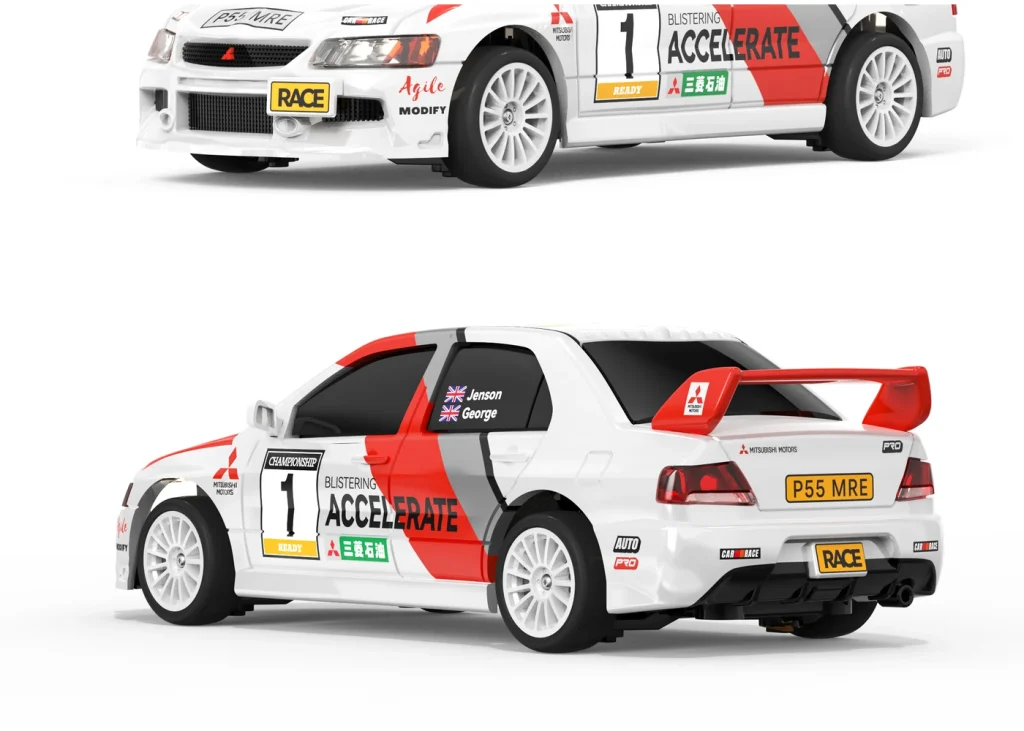
Not on a track. On a desk, a kitchen table, a tiled floor, a shop counter, or a single sheet of A3 paper used as a course. The car is 73.7 mm long, shorter than a smartphone, so the whole circuit fits in arm’s reach.
It runs 25 to 30 minutes per charge and charges from any USB source, which matters more than it sounds: there is no charger to lose, no pack to buy and no ritual before the first run. Take it out of the box and drive it on the counter.
Compare that with hobby-grade drifting, where the entry ticket is a chassis build, a battery program, tire changes and a club night. That product is excellent and it is not this one. The difference is not quality, it is commitment — and commitment is exactly what a gift buyer and a first-time RC customer will not give you.
If you want to place this car against the rest of the category, our guide to entry-level vs hobby-grade RC cars draws that line in detail.
Surface matters more than floor area. Carpet stops the car dead. Laminate, tile, a table top or a sheet of paper all let it slide, which is why the counter works better than the shop floor. It is the only thing your staff has to check before a demo, and it takes two seconds.
Practical takeaway: the product’s real feature is the room it needs. Sell the room, not the specification.
Why That Makes It a Short-Video Product
Vertical video rewards one thing above all: action that fits in the frame. A hobby-grade drift car needs distance, so the phone has to pull back, and at that distance the car becomes a dot.
A mini RC drift car drifts inside the frame at arm’s length. The slide angle is visible, the counter-steer is visible, and the whole maneuver starts and finishes in about the time a viewer gives a clip before deciding to scroll.
What to shoot
Five formats, all of them shootable by one person with a phone and no script.
| Format | What you film | Shoot time | Where it lands | What it proves |
|---|---|---|---|---|
| One-take desk drift | Hand places the car on a desk, one slide, cut | 10 min | Reels, TikTok, Shorts | The space claim, instantly |
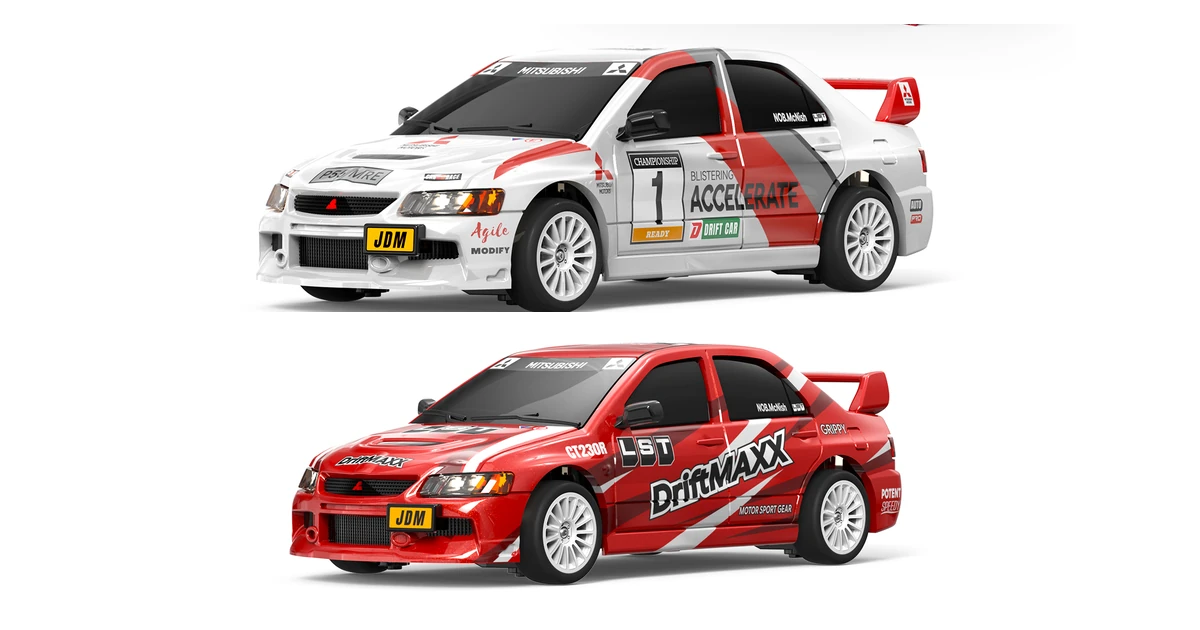
| Livery head-to-head | White and red cars through the same corner | 15 min | Reels, TikTok | There are two SKUs worth stocking |
| Counter course | An A3 paper course taped on the counter | 20 min | TikTok, Shorts | Playability with no permanent setup |
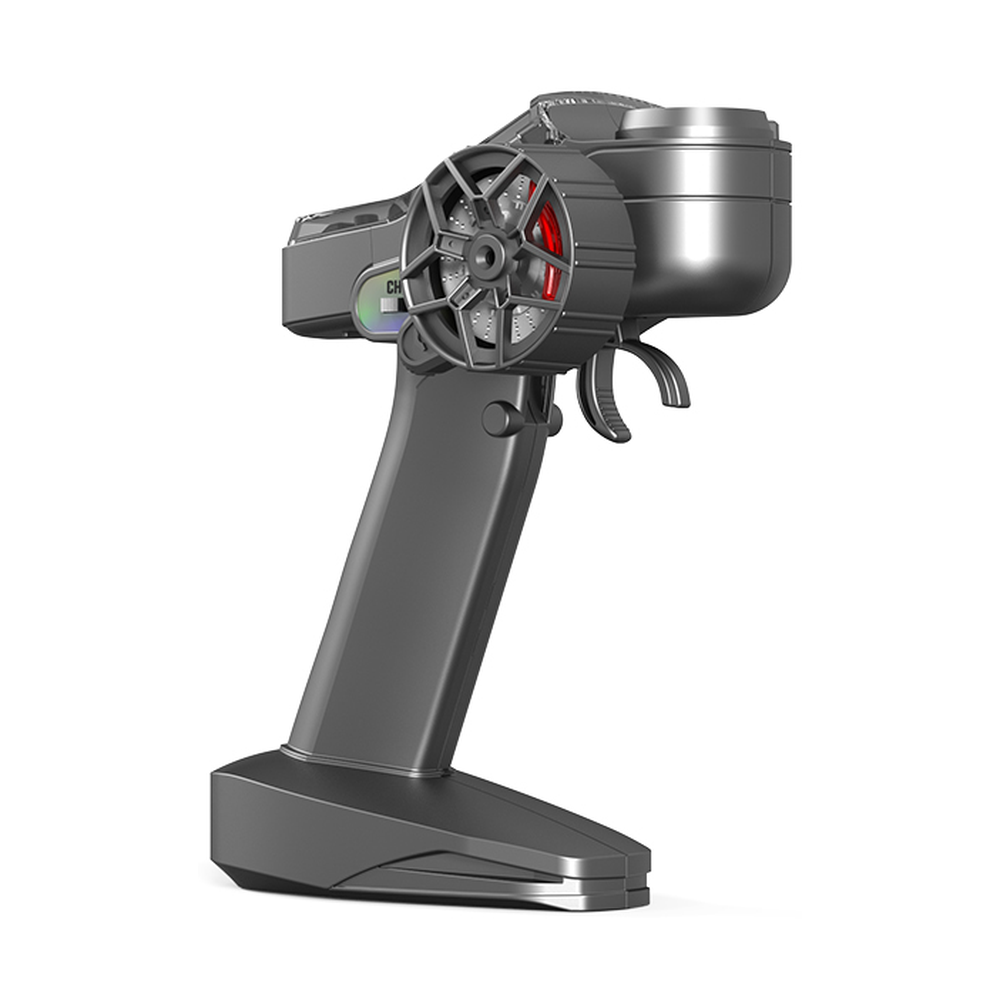
| 40-second unboxing | Box, car, transmitter, first slide | 15 min | Reels, YouTube Shorts | Exactly what the buyer receives |
| Customer try | Transmitter handed to a walk-in | 20 min | Stories, Reels | Social proof without a script |
Shoot times are for one person with a phone and no editing beyond a trim and a caption.
Why the video works better than a photo
A static photograph of a 1:64 car is indistinguishable from a diecast listing, so it competes with every other 1:64 image on the internet. A clip is unambiguous: this object moves. That is the one thing a buyer cannot get from a spec sheet, and it is the reason the format earns attention. For the still-image side of the same job, our guide to what RC toy buyers want in product photos and videos covers it.
Practical takeaway: shoot one clip a week with a phone on the counter. The format does not need a studio, and the product does not need a track.
What not to shoot
Three mistakes kill the clip. Filming from standing height, where the car is a speck and the desk is a landscape. Filming on carpet, where the car cannot slide at all. And cutting too early, so the slide reads as a spin instead of a drift. Shoot low, shoot on a hard surface, and hold the frame until the car straightens out.
From View to Sell-Through
A view is not a customer. Here is the path, and where most shops lose people.
Clip to profile. The caption carries the model name and the scale; the profile pins the line. Someone who watched twice is already looking for a price.
Profile to enquiry. One pinned post with the range, one link to the shop page, one WhatsApp or DM route. If a viewer has to search for how to buy, the clip was wasted.
Enquiry to order. Answer three questions and nothing else: what it costs, how long it runs, and whether it needs a track. Those are the only three the car raises.
Order to add-on. Two liveries exist so that the second unit is an obvious suggestion rather than an upsell. Offer the pair and let the buyer choose.
The positioning that makes it move
A mini RC drift car is not a considered purchase. It is a counter add-on and a gift, which means it has to sit where impulse happens: next to the till, beside the diecast case, or in the window with the clip running behind it.
Retailers who treat it as a considered purchase put it in a cabinet, and it dies there. The same product at eye level with a moving demo sells.
What the shop actually needs
One demo unit that is allowed to get scratched, one clip a week, one shelf card, and staff who can answer the three questions above. That is the entire operating requirement, and none of it is expensive.
Practical takeaway: treat the clip as the salesperson and the shelf as the checkout. The product is small enough that the demo can live on the counter all day.
How to read the first two weeks
Watch three signals rather than one: saves, profile visits and direct messages. Views will follow the algorithm and they are the least useful of the four. Saves tell you the viewer intends to come back. Profile visits tell you the clip did its job. Messages tell you the shelf card and the buying route are working. If saves are high and messages are zero, the buying route is buried, not the product.
The Collector Angle, Briefly
There is a second buyer, and it is the one most shops miss: the 1:64 diecast collector. The car is the same scale, the same body and the same license as the static model already in his cabinet, which makes the swap almost free for him. We covered that argument in full in why a 1:64 RC drift car is the missing SKU on a diecast shelf, and it is worth reading before you plan the shelf.
For this article the point is only that the video buyer and the collector are the same customer at different moments. The clip brings him in; the case converts him.
Practical takeaway: the clip acquires, the case converts. Run both and you are selling to the same person twice.
Trade Reality Check
Three things to settle before you put money into the line.
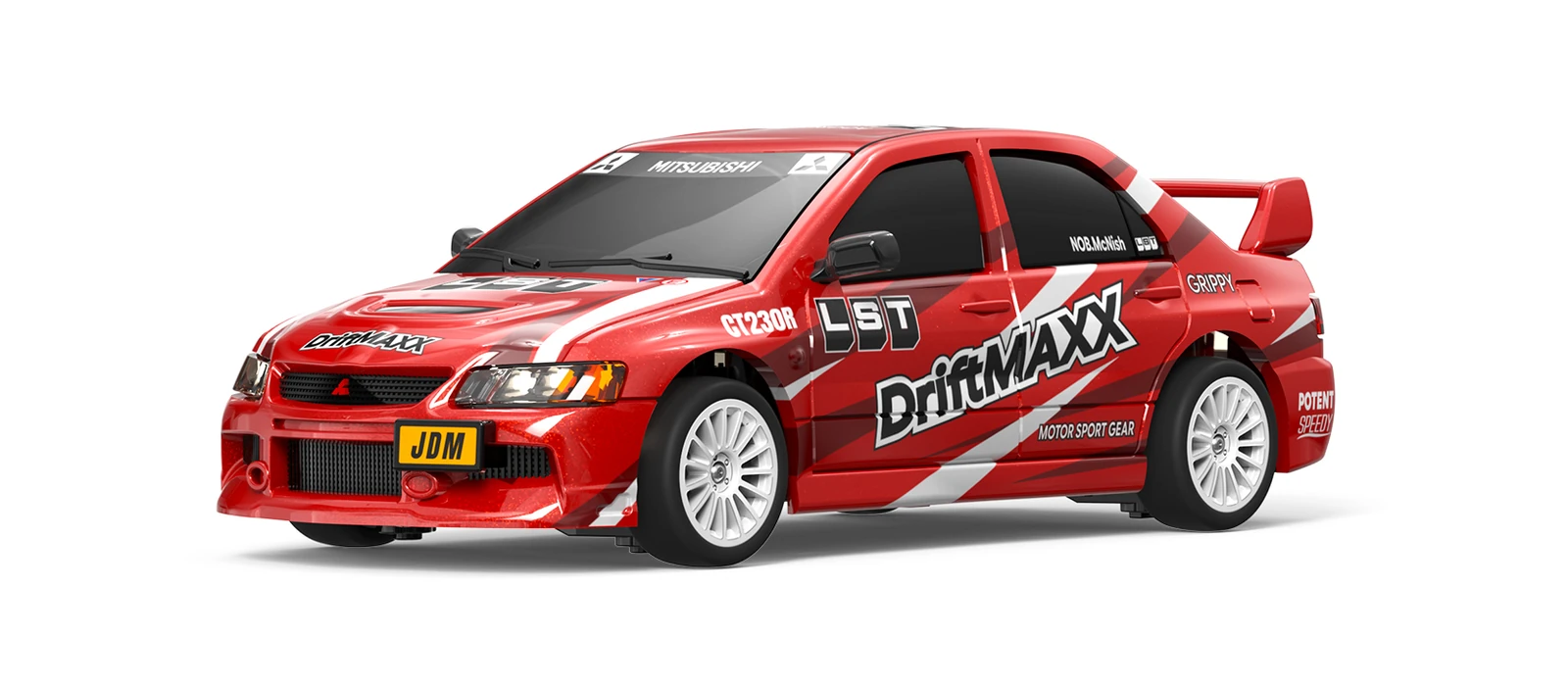
Licensing. This is an officially licensed Mitsubishi Lancer Evolution IX, and the retail box carries the Mitsubishi Motors Official Licensed Product mark. That matters for video: you can show the badge and the livery on camera without explaining or blurring them, which is not true of unlicensed lookalikes.
Supply. MOQ, carton configuration, mixed-livery cartons and OEM packaging are quoted per market, because each one changes the number. Ask for the sheet rather than a range.
After-sales. The only wear item on the car is the battery. Ask at quote stage what spare bodies and packs can be added to your carton, and stock them next to the demo unit rather than in a drawer.
Sample first. Drift feel is the one thing a specification sheet cannot describe, and it is what your customer will judge in ten seconds on the counter. Run a sample on your own surface before you decide the livery split.
Practical takeaway: the three questions that decide whether this line is profitable are licensing, carton configuration and spare support. None of them are about the car itself.
FAQ – Mini RC Drift Cars for Shops and Distributors
Can a 1:64 RC car drift indoors?
Yes. It is built to drift on a desk, a table or a tiled floor. Proportional steering and throttle let the driver hold an angle and catch it, which is what makes it drifting rather than skidding.
How much space does it need?
A desk is enough to start, and a sheet of A3 paper is enough for a course. The car is 73.7 mm long, so a two-meter run of floor is already a large circuit for it.
How long does it run on a charge?
25 to 30 minutes, depending on how much of that time is spent at full throttle. It charges over USB from any 5V source, the same cable that charges a phone.
Is it a toy for children?
No. It is graded 14+ and marked as a precision scale model, which is the same positioning as the diecast it sits beside. It is a collector object that happens to drive.
Does it come with spare parts?
The car ships with its transmitter and a USB charging cable. Spare bodies and battery packs can be added to your carton on request — ask the sales team what is available for your market.
Practical takeaway: everything else your staff needs to know is on the shelf card. Three questions, three answers, no training session.
Ask for a Demo Unit and the Wholesale Price List
We would rather you tested the clip before you tested the carton. Ask for a demo unit and the wholesale sheet for your market, shoot one clip on your own counter, and see what the format does before you commit to a line.
Send your country, your channel (model shop, hobby retail, online or distribution) and the volume you are considering. You will get the specification sheet, the carton and livery options and the sample terms in one reply.
The 1:64 Mitsubishi Lancer Evolution IX RC drift car listing carries the full specification, and our wholesale team handles sample and MOQ questions directly.
Practical takeaway: a drift car that fits on a desk and in a 15-second clip. Test it on your own counter first — that is the whole argument.
MITSUBISHI, Lancer Evolution and related marks are trademarks of Mitsubishi Motors Corporation. This product is manufactured under official license by JXC Model Technology, an ISO 9001 certified RC car manufacturer in Shantou, China, exporting B2B since 2015.