
Table of Contents
Your Store Already Has the Cars. What It Needs Is a Reason to Stay.
Walk into a toy shop, hobby store or mall entertainment zone and you see the same scene: remote control cars behind glass, customers who pick one up, check the price, put it back and leave. The product is not the problem. Nothing in the room gives a shopper a reason to stand still for ten minutes.
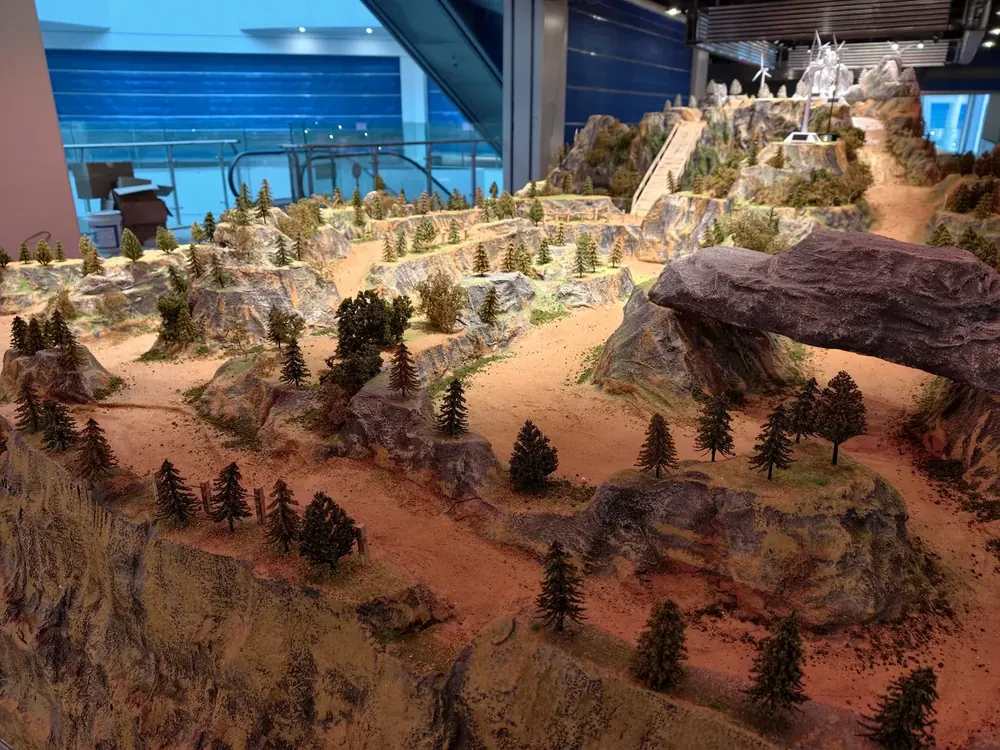
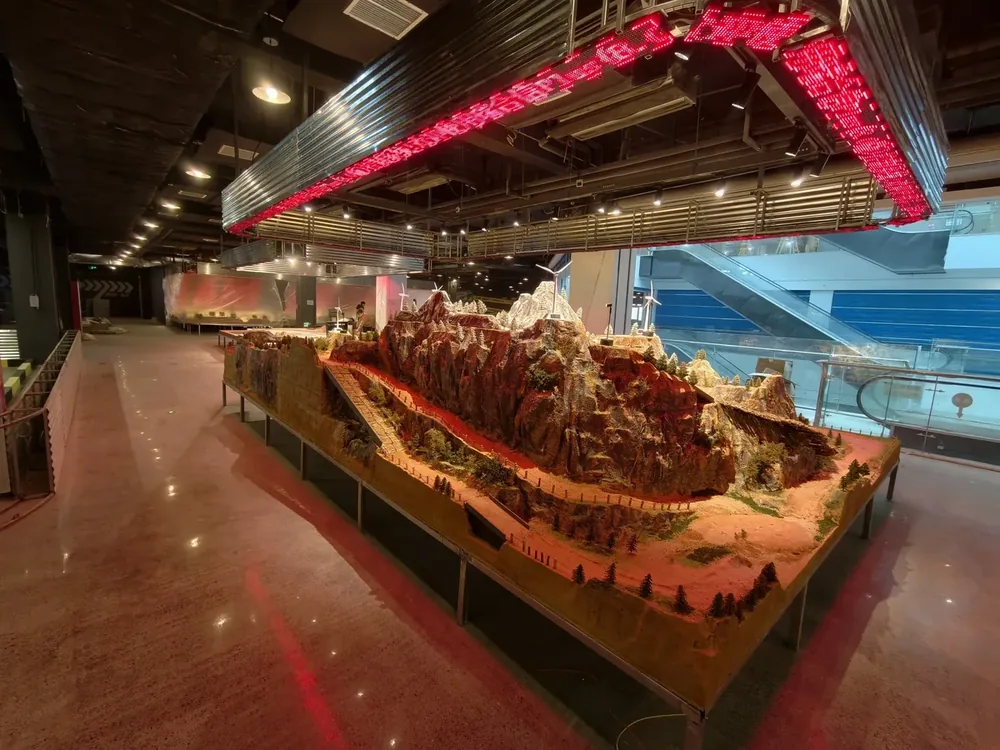
That is the gap an indoor RC diorama track closes. It is a scale miniature landscape — snow mountain, desert dunes, rocky gobi, alpine highland, grassland or coastline — built indoors so RC cars can drive, climb and drift across it. Unlike a display shelf, it is playable, and a playable display changes the economics of a physical store.
This guide is for the people who decide how a store uses its floor space: toy distributors, retail owners, and managers of malls and activity centers. We cover what an indoor RC diorama track is, why it drives foot traffic and dwell time, how to match terrain to the model, what drives the cost of a build, and how to run it so visitors return. Every track we build is custom-made to your dimensions, and can be ordered alone or together with the vehicles.
What Is an Indoor RC Diorama Track?
An indoor RC diorama track is a purpose-built scale terrain scene designed for radio-controlled vehicles to operate on. It is not a static model village or decorative prop — the surface is engineered so that a 1:12 RC crawler can grip real gradients, a 1:43 drift car can hold a line through a corner, and a route can demand genuine throttle control to complete.
Three things separate a working diorama track from a decorative one:
- Drivable surfaces. Gradients, rock faces, gravel and sand are built to be driven on. If a vehicle cannot cross it, it is scenery, not a track.
- Scale-consistent proportions. A 1:12 crawler needs roughly twelve times the terrain detail of a 1:43 drift car. Mixing scales on one surface usually means one of the two drives badly.
- Repeatable routes. The best tracks offer more than one line to the top, so a visitor can try again, compare runs and come back to beat their own time.
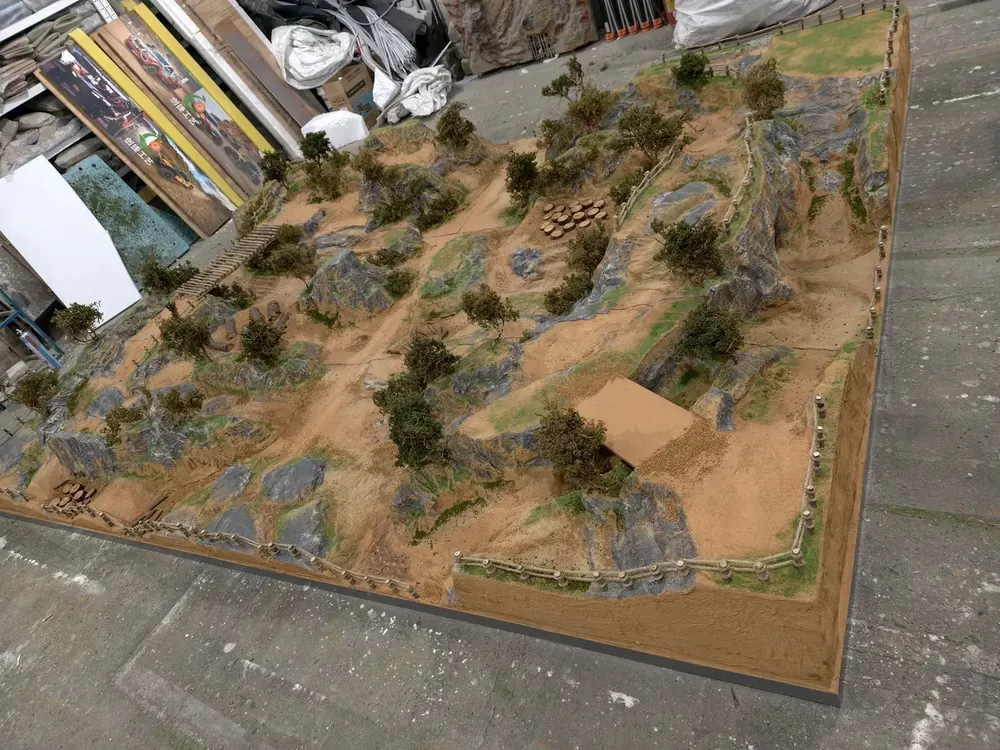
Because the terrain is custom-built rather than mass-produced, the scene, dimensions and difficulty are specified by the customer. That flexibility lets one concept — a mountain pass, a dune field, a coastal highway — scale from a corner display in a small shop up to a full activation zone in a shopping mall.
Why It Works: Four Mechanisms That Drive Foot Traffic
A shopper who physically engages with a product converts at a materially higher rate than one who only reads a label. An indoor RC diorama track triggers four mechanisms at once — and together they are what turn a display into measurable foot traffic for toy stores, malls and activity centers alike.
1. It converts a passive display into a hands-on demonstration
Online retail wins on price and convenience, so a physical store has to compete on what e-commerce cannot replicate: letting someone actually use the product. A track turns every passer-by into a potential test driver, and a test driver into a qualified buyer. A customer who has already driven a model has invested time and attention in it, and that hands-on test is usually what settles the choice between two similarly priced cars.
2. It extends dwell time, the strongest predictor of basket size
A customer who walks the aisles for three minutes buys small. One who stands at a track for fifteen minutes while their children take turns is inside the store long enough to browse, ask questions and notice accessories. In experience-led retail, dwell time is the first metric operators watch, because basket size tends to follow time spent in store.
3. It creates a free, self-generating content engine
A well-built indoor RC diorama track is photographable. Customers film slow-motion footage of a crawler clearing a rock ledge or a drift car sliding through a hairpin, then post it to TikTok, Instagram or YouTube. Every post is free advertising with the store’s location attached. This is why tracks belong near the entrance, not at the back — you want the filming where the public can see it.
4. It gives you something to run events around
Events are how physical retail builds a returning audience, and a track gives you a reason to schedule one: a weekend try-out session, a timed challenge, a beginner clinic, a birthday booking. Stores previously limited to seasonal promotions suddenly have a monthly activity calendar — and a track is the only piece of store furniture that generates events instead of occupying space.
The pattern shows up well beyond the RC category. Placer.ai’s 2026 retail consumer study, which tracked year-over-year visit growth across 100 leading US retail brands, found that the fastest-growing chains were not only the cheapest ones. Retailers pairing value with discovery and hands-on experience, such as Hobby Lobby (16.0% more total visits year over year) and Five Below (17.1%), grew traffic while mid-market brands offering neither advantage lost it. At store level the logic is the same: the shop that gives people a reason to walk in becomes a destination rather than a stockroom.
Match the Terrain to the Model: The Biggest Decision in Any Diorama Track Project
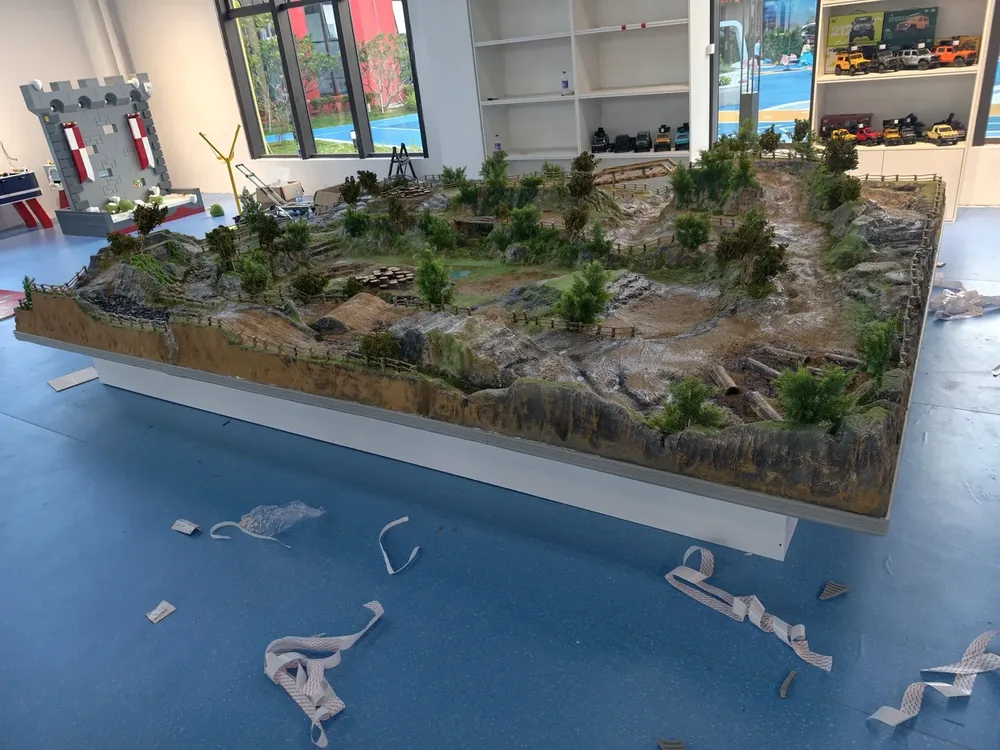
The most common reason a diorama track underperforms is a mismatch between terrain and vehicle. Terrain that is too easy makes a crawler look dull; terrain that is too aggressive makes a drift car spin out on the first corner. The same terrain-versus-vehicle logic is covered in more depth in our guide to RC car scale, which is worth reading first if you are still deciding which category to stock. Getting this pairing right is worth more than any amount of visual detail.
As a rule, terrain difficulty should scale with the vehicle’s suspension and wheel size. Large-scale crawlers need vertical challenge — rock steps, loose gravel, steep grades. Drift cars need flat, smooth, predictable surfaces with defined corner radii.
| Terrain type | Best paired with | Why it works | Typical scale |
|---|---|---|---|
| Rocky mountain / cliff pass | 1:12 4WD crawler | Steep grades and ledges reward low-speed control | 1:12 |
| Snow mountain scene | 1:12 4WD crawler | Low-traction surface makes tire choice matter | 1:12 |
| Desert dune field | 1:12 or 1:24 crawler | Loose sand tests power delivery and throttle feel | 1:12 / 1:24 |
| Gobi / gravel plain | 1:12 or 1:24 crawler | Mixed hard and loose surface, forgiving for beginners | 1:12 / 1:24 |
| Alpine grassland | 1:24 crawler | Gentle inclines suit smaller, lighter models | 1:24 |
| Coastal / beach route | 1:24 crawler, 1:43 drift | Transition zone works for relaxed and playful driving | 1:24 / 1:43 |
| Smooth highway / city circuit | 1:43 drift car | Flat, grippy surface with defined corners | 1:43 |
This is where a custom-made track pays off. Rather than forcing your store to fit a fixed product, you specify the scene and surface to match the models you actually stock. A store built around 1:12 crawling culture can order an aggressive rock and snow setup; a store serving drift enthusiasts can order a flat mountain-highway scene with tight hairpins instead.
Recommended Model Pairings by Terrain
- Large crawling terrain, 20–40 m²: pair with the Toyota Land Cruiser 80 crawler (LC1201) or the 1:12 licensed Land Rover all-terrain crawler (LR1201) — both handle steep, loose surfaces and are the models customers most want to test first.
- Tabletop city or highway track, 1–2 m²: pair with a Toyota AE86 drift car (AE4386) or a Toyota Supra drift car (SP4301). Small footprint, low outlay, easiest way to add a playable element to an existing shelf.
- Mid-size themed terrain, 5–10 m²: pair with a 1:24 4WD crawler such as the Mitsubishi Delica van (1:24, licensed) or the JXC LR1801 — a good middle option for stores wanting a visible track without giving up much floor area.
New to the category? Our RC car categories explained overview maps out crawlers, drift cars and off-road models by use case. Stores carrying several categories often run two tracks rather than one: a small drift circuit near the till for impulse engagement, and a larger crawling zone deeper in the store where visitors stay longer. This split ensures whichever category a customer came in for, there is something to drive. If you are unsure which price tier to carry at each end, our comparison of entry-level vs hobby-grade RC cars explains where the two audiences overlap.
Three Setup Tiers: From a Counter Display to a Mall Activation Zone
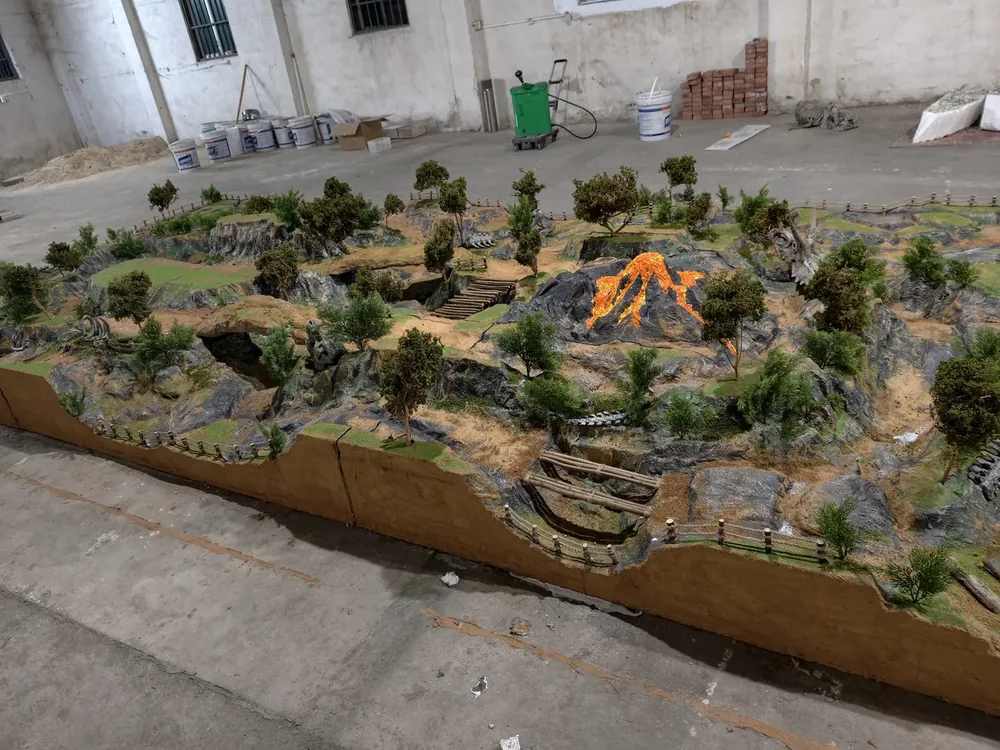
Not every toy store can commit to a 40-square-meter indoor RC diorama track on day one, and it is a mistake to try. If you are buying for resale rather than for your own floor, start from our RC car wholesale manufacturer page to see how track and vehicle orders are structured together. The practical path is to start with a small playable surface, measure what it does to dwell time and conversion, then scale. All dimensions below are examples of what can be produced — every track is custom-built, so size follows the space you have.
| Tier | Typical footprint | Best for | What it delivers |
|---|---|---|---|
| Entry — counter or tabletop | 1–2 m² (e.g. 2×3) | Small toy shops, hobby counters, pop-up stands | Adds a playable element to an existing display; builds the test-drive habit |
| Mid — themed floor track | 5–10 m² (e.g. 2×4 or 3×3) | Toy stores, hobby shops, family entertainment corners | Visible from the entrance; supports timed challenges and short events |
| Flagship — experience zone | 12–40 m² (e.g. 3×4 or larger) | Malls, activity centers, large hobby stores, parks | Anchor attraction; supports scheduled events, rentals and recurring visits |
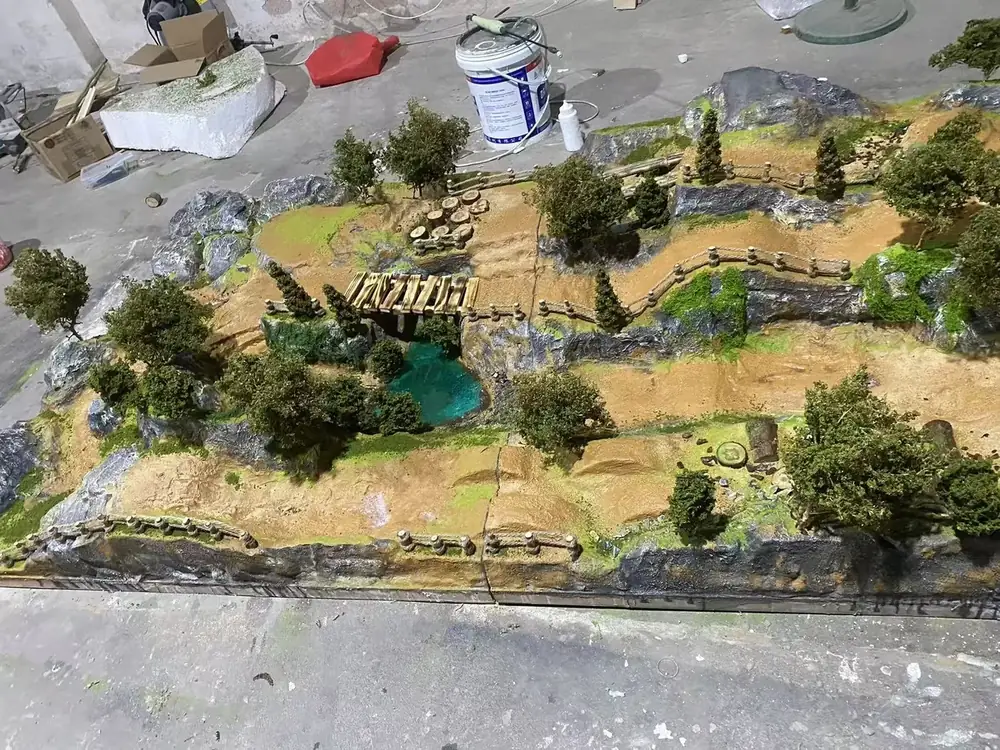
Two practical layout notes. First, place the track where it can be seen from the doorway — an activity nobody notices produces no foot traffic. Second, leave standing room for spectators, not just drivers. A track with three people watching does more for the store than one with a single driver, because the watchers are the ones who ask about buying.
Because scenes are custom-made, one concept can be produced at different sizes. A coastal highway scene can be ordered as a 2×3 tabletop piece for a small shop or a 3×4 installation for a mall concourse, using the same visual language. That makes scaling up straightforward once a smaller track proves itself.
How to Run It: Turning a Track Into a Recurring Audience
A diorama track with no programming is just furniture. The advantage of a playable surface is that it carries an event calendar, and a predictable calendar turns one-time visitors into regulars. This rhythm works at almost any store size and needs no dedicated events budget.
- Weekend try-out slots. Run two or three short guided sessions per weekend day. A staff member sets up the vehicle, explains throttle control in two minutes and lets the visitor drive a fixed route. This is the highest-converting activity a store can offer because it removes the fear of breaking something.
- A monthly timed challenge. Publish a simple format — fastest clean run over a set course — and post the leaderboard in-store. It costs almost nothing, gives repeat visitors a reason to return and produces a steady stream of customer-shot video.
- Beginner clinics. A one-hour session on maintenance, tire choice or battery care. Charging a small fee and discounting accessories for attendees converts a service into a sale and positions the store as the local expert.
- Rental or demo units. Keeping two or three vehicles for short-term use lowers the barrier for someone not ready to buy, and lets you demonstrate models a customer would not otherwise consider.
- Local hobby group partnerships. Invite a local RC club to run a demonstration day. You provide terrain and space; they provide the crowd, credibility and content. Shopping centers already run this kind of activation during sale weekends — a miniature off-road procession through mall corridors, with shoppers invited to photograph and interact with the vehicles. The same event-led pattern sits behind demand for models like the Drift King AE86, which sells on heritage and story as much as on specification.
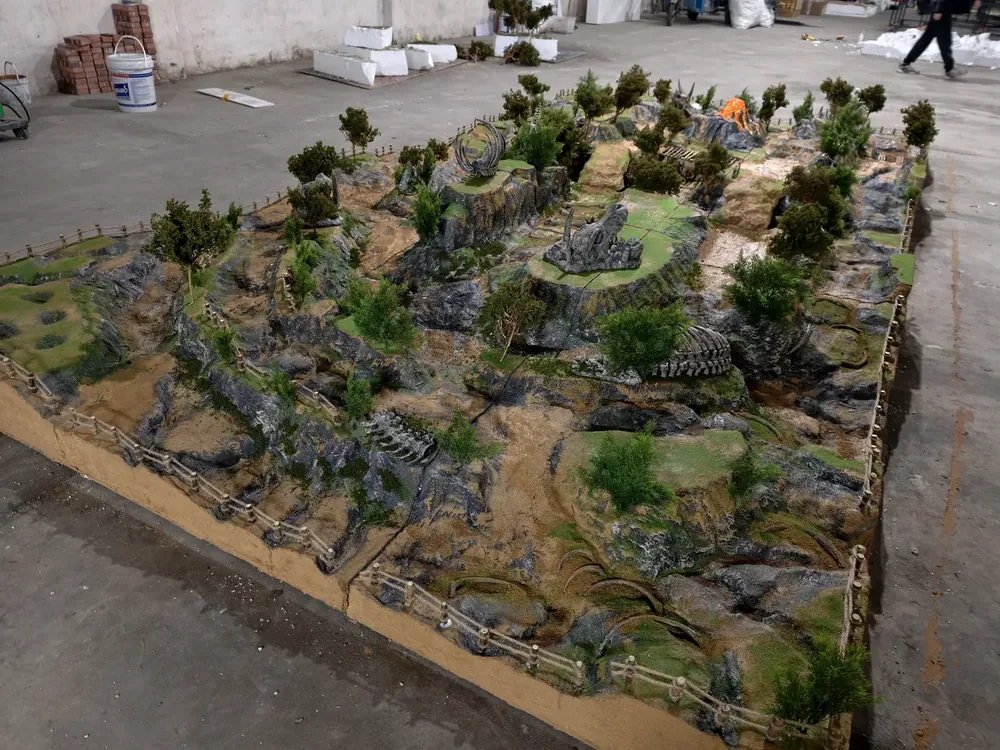
The principle: the track creates the reason to visit, the calendar creates the reason to return. Stores running a predictable weekly or monthly activity build a customer base that treats the store as a destination rather than a supplier.
And because every session generates footage, the diorama track feeds your social channels as well as your floor. That is the loop worth building: a track that brings foot traffic in, video that brings new visitors from outside your catchment area, and events that bring both back.
Installation, Shipping and Safety: What Buyers Ask Before Ordering
Delivery Format and Assembly
Diorama tracks are supplied as modular sections so they can be packed for international freight and reassembled on site. A tabletop piece arrives largely assembled and can be placed on a counter or low table the same day. A floor track of 5 m² or more ships in several sections that key together, which is what keeps freight volume and handling manageable. Section joints are designed to sit flush with the driving surface so a crawler crossing a seam does not catch a wheel.
Expect a tabletop track to be running within an hour of unboxing. A mid-size floor track typically takes half a day to a day for two people to position, join and dress. A flagship experience zone — 12–40 m² — is best installed over two to three days, and we supply a layout drawing so the sections go down in the right order the first time.
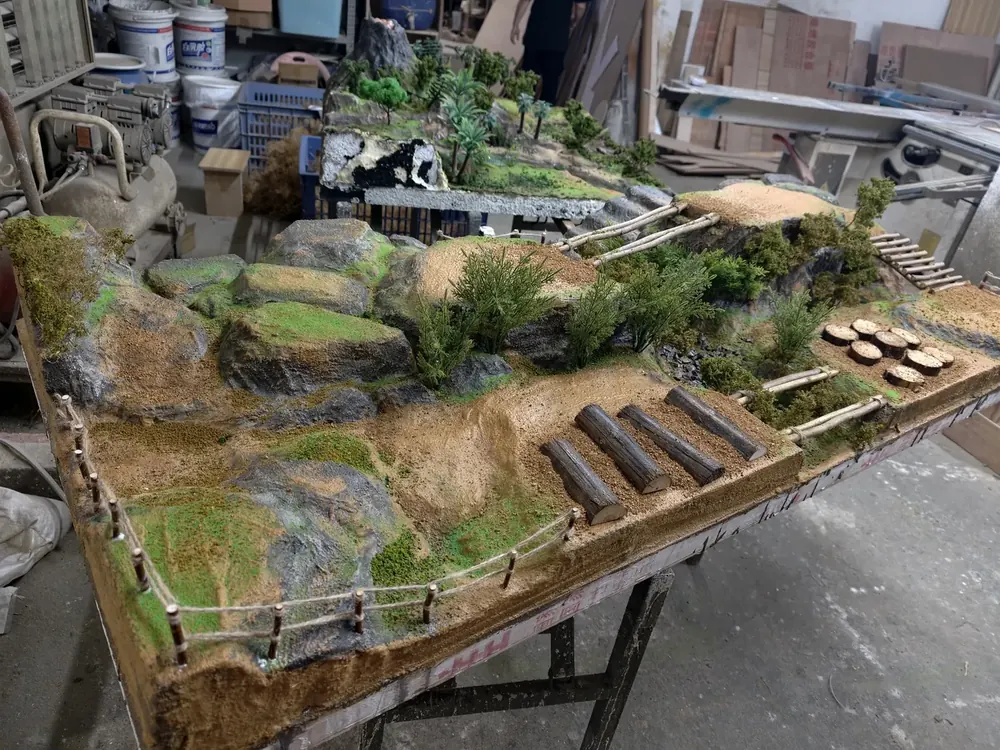
Because tracks are custom-made, freight is quoted per configuration. The largest cost driver is not weight but volume, and volume depends far more on whether the terrain is built in stacked layers for transport than on the total floor area. If budget is the constraint, ask for a two-tier design: a low-relief base scene that ships flat, with the high mountain element as a removable piece. This can cut ocean freight cost substantially on a wide track without reducing the driving experience.
Safety, Supervision and Durability
Indoor displays sit in public spaces, so three points should be settled with your insurer or landlord before installation:
- Surface height and edges. Raised terrain needs a defined boundary so visitors do not trip on a hard edge. Most retail installations use a low plinth or rubber-edged surround that also protects the terrain from accidental knocks.
- Age guidance and supervision. Recommended age follows the vehicle, not the track — 1:43 drift cars are not suitable for very young children, while 1:12 crawlers are driven at walking pace. A short printed sign stating the age range and ‘children to be supervised’ resolves most incidents before they happen.
- Cleanability. Loose material such as sand and gravel is the first thing to degrade in a public setting. Specify sealed or bonded surfacing for areas within reach of visitors, and keep genuinely loose material for enclosed sections behind a barrier.
For durability, the practical question is how the surface behaves after two thousand passes. Bonded scenic material, sealed gravel and hard-coated rockwork hold their shape; unsealed loose material does not, and will need topping up. Loose sand or gravel should be treated as a consumable, and a spare material kit supplied with the original order is usually enough to refresh a track for a full trading year.
Shipping to North America, Europe, the Middle East and Southeast Asia
We ship worldwide, with regular wholesale shipments to the United States and Canada, the United Kingdom and the European Union, the Gulf markets including the UAE and Saudi Arabia, and Southeast Asia. The commercial terms that matter most for a first order are straightforward: a low minimum order quantity so a single store can trial the concept, samples for distributors evaluating the product, and DDP shipping available for buyers who prefer one all-in delivered price rather than managing customs themselves.
Maintenance and Running Cost
A diorama track has very little that can fail because there is nothing electrical in it — the only powered components are the vehicles. Ongoing cost is therefore limited to surface refresh, spare scenic material and the occasional replacement of a damaged decorative element. Stores running a track daily should plan a visual inspection once a week and a surface refresh roughly once a year. Budget for two or three dedicated demo vehicles per track, since those take far more use than anything sold.
Five Mistakes That Kill the Effect
Most disappointing diorama installations fail for one of five reasons, and all five are avoidable before you spend anything.
- Building scenery that cannot be driven. If the surface is too smooth for a crawler to feel challenged, or too rough for a drift car to hold a line, visitors lose interest within a minute. Terrain difficulty must match the vehicle.
- Putting it where nobody passes. A track at the back of the store generates almost nothing. Foot traffic follows visibility, so the display belongs where shoppers already walk.
- No staff involvement. Unattended play converts poorly. Even two minutes of guided setup dramatically increases the number of visitors who progress to a purchase conversation.
- Mismatched models on the terrain. Showing a 1:43 drift car on a rocky climbing course, or a heavy 1:12 crawler on a flat tabletop circuit, makes both products look worse than they are.
- Running one event and stopping. A single opening-day activity produces a single spike. Value comes from rhythm — the same slot, every week or month, until customers plan around it.
For Distributors: How to Supply Diorama Tracks to Your Wholesale Accounts
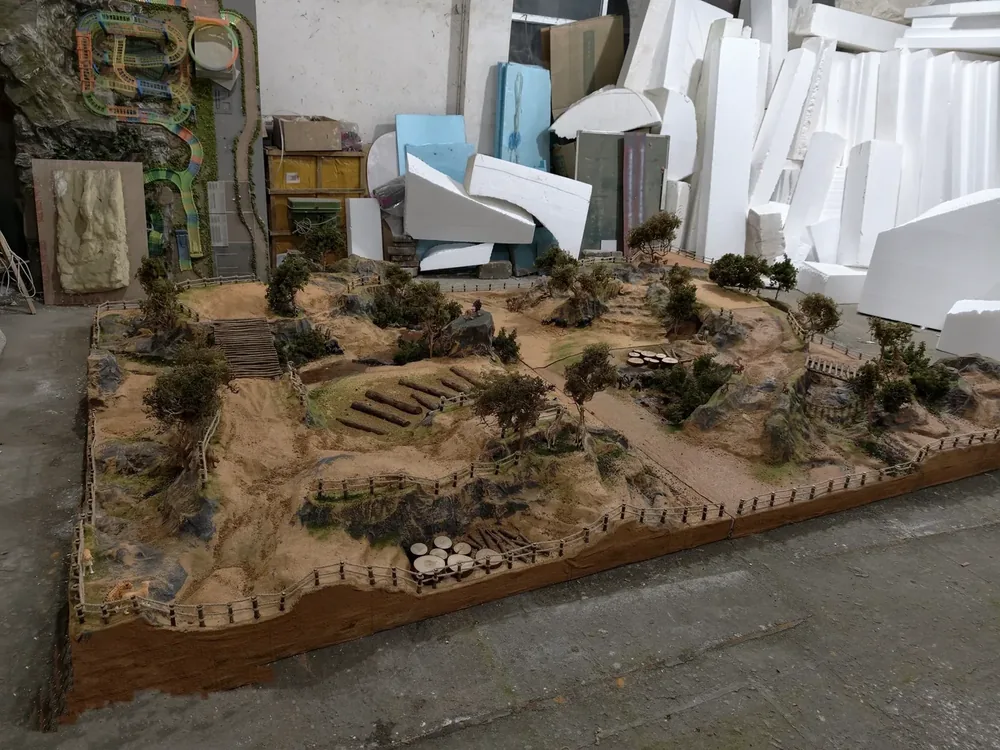
For distributors and importers, an indoor RC diorama track is less a product line than a way to deepen the relationship with the toy stores and hobby shops you already sell to. It solves a problem your retail accounts have but rarely articulate: they need something in the store that online sellers cannot copy. If you already supply wholesale RC cars to a territory, a diorama track is the natural next line to add alongside it.
Three commercial points make this practical to sell as a wholesale add-on:
- Custom to the customer’s space. Because tracks are made to order, a retail account specifies the scene, dimensions and difficulty to suit its floor. Available scenes include snow mountain, desert, gobi, alpine highland, grassland, coastal and highway settings.
- Sold standalone or bundled with vehicles. A diorama track can be ordered on its own, or combined with the models that suit it, so a store receives a complete display solution in one wholesale shipment rather than assembling it from separate suppliers.
- Becomes an ongoing vehicle sales driver. Every diorama track needs cars to be worth having, so the installation naturally pulls recurring model orders behind it. This is the mechanism that matters most: the track keeps the model order recurring.
There is also a competitive moat worth naming. Once a store has built its floor around a terrain scene, switching suppliers means rebuilding the entire setup. A well-matched diorama track is therefore not just a sale — it is a reason for that account to keep buying models from the same wholesale source. For a distributor building a defensible territory, that is worth more than any single order.
FAQ: Indoor RC Diorama Tracks for Retail
What exactly is an indoor RC diorama track?
It is a custom-built scale terrain scene designed for RC vehicles to drive on — snow mountain, desert, gobi, grassland, coastal or highway settings. Unlike a static display model, the surface is engineered so crawlers and drift cars can actually operate on it, which turns it into a hands-on experience rather than decoration.
Can a diorama track be made to fit my store instead of a standard size?
Tracks are custom-made to the customer’s requirements. Common layouts include 2×3, 2×4, 3×3 and 3×4, but dimensions follow your available space and the scale of vehicle you intend to run, so a compact counter piece and a large mall installation are both possible from the same scene concept.
Can I buy the diorama track without buying cars at the same time?
Yes. Tracks can be ordered on their own, or purchased together with the vehicles that suit the terrain. Many retail accounts start with just the track and add models later, or order both together so the display is complete in a single shipment.
Which RC models work best on which terrain?
Match terrain difficulty to the vehicle’s suspension and wheel size. Large rocky, snowy or dune terrain suits 1:12 4WD crawlers such as the Land Cruiser 80 (LC1201) or the licensed Land Rover crawler (LR1201). Mid-size themed scenes suit 1:24 crawlers. Flat, grippy city or highway circuits suit 1:43 drift cars. Pairing the wrong model with the wrong surface is the most common reason a display underperforms.
How much floor space does a track need before it makes a difference?
A tabletop track of roughly 1–2 m² is enough to introduce a playable element and start building the test-drive habit. A themed 5–10 m² track is visible from the entrance and supports short events. A 12–40 m² experience zone is where a store becomes a destination and can run a full activity calendar.
Will a diorama track actually increase store foot traffic?
The mechanism is dwell time plus content generation: a playable display keeps visitors in the store longer, and a photogenic one produces customer-shot video that brings in new visitors through social media. Shopping centers already use RC displays as foot-traffic activations alongside retail promotions. Results vary by location, traffic flow and how actively events are run, so measure the effect against your own baseline rather than assuming it.
Is a diorama track better suited to a store or to a shopping mall?
Both, for different reasons. A single toy or hobby store benefits from the conversion effect — more test drives, higher average transaction value. A mall or activity center benefits from the engagement effect — a free interactive station that gives shoppers a reason to linger during sale weekends and holidays. Parks and family entertainment venues sit between the two.
Request a Custom Diorama Track Design
If your store, mall or activity center has a floor area and a customer base, the next step is to tell us about both. Send your available space and the models you intend to display, and we will come back with a terrain recommendation, suggested dimensions and vehicle pairings that make the display sell — with samples and distributor pricing if you are buying for multiple retail accounts. You can also browse the full shop page or reach us directly through our contact page.
Tell us your store size and the scene you have in mind — snow mountain, desert, gobi, alpine, grassland, coastal or highway — and we will suggest the configuration that fits. Every track is custom-made, so there is no standard size to work around: the design follows your space.