
A brushed RC motor is the practical choice when low purchase cost, moderate performance and straightforward replacement matter most. A brushless system is worth considering when the vehicle needs greater performance potential or less brush-related maintenance. For crawlers, the choice also depends on low-speed control, the actual motor and ESC combination.
Wholesale buyers need to choose the right motor for their customers. They also need to check what comes with the RC car and whether spare parts are available for repairs. This brushed vs brushless RC motor guide explains how both motors work. It then gives retailers and distributors a simple checklist to help them choose.
What Is the Difference Between Brushed and Brushless RC Motors?
There are two motor types. Both motors use electricity to spin. They are different because they switch electricity in different ways. This switching happens inside the motor coils. This process is called commutation.
How a brushed RC motor work
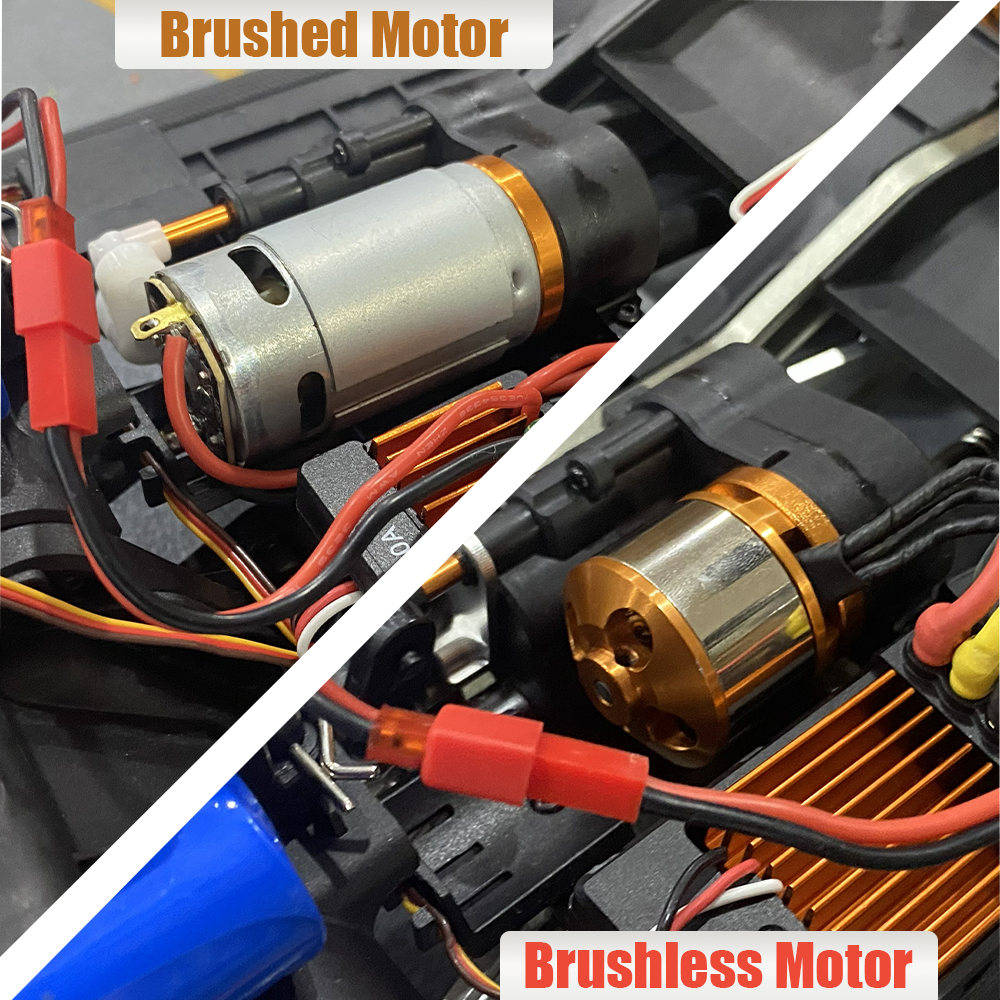
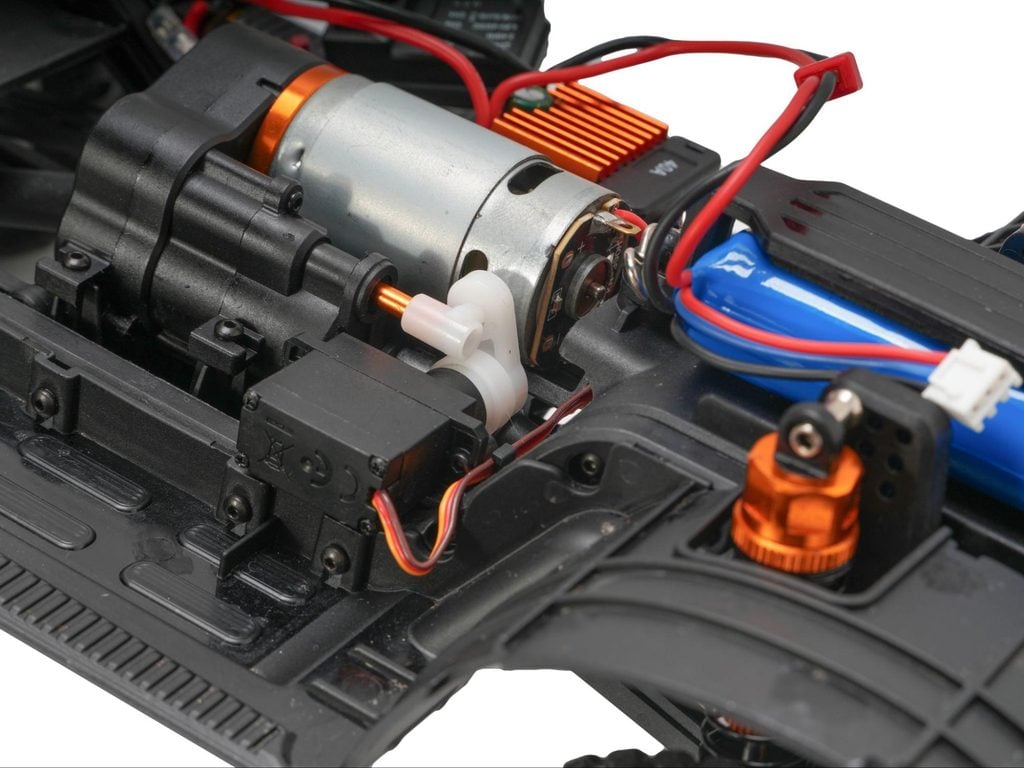
A brushed DC motor has small brushes. The brushes touch a rotating part is called commutator. The commutator changes the current when the motor spins. This system uses simple electronics, so many basic RC cars use brushed motors. These motors are also cheaper for beginners.
The contact also causes wear. The brushes can become old after use. Some brushed motors allow users to replace the brushes. Some brushed motors need full motor replacement. A sealed motor is not easy to rebuild. Buyers should not think every brushed motor is rebuildable.
How a brushless RC motor works
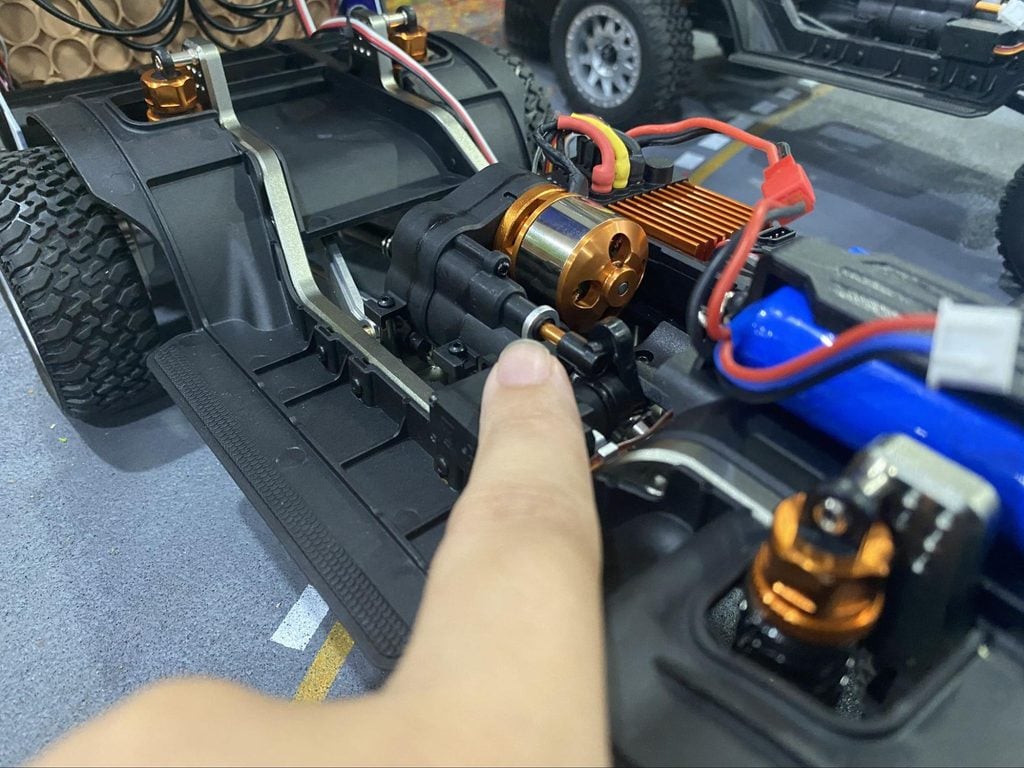
In RC Cars, brushless motors uses electronic switching. The ESC sends power to the motor coils and this makes the rotor spin. As there are no brushes, there is less brush wear. However the bearings, wires, and other parts can still become weak over time. Brushless motors also need the right ESC and control system.
Brushed vs Brushless RC Motor
Speed of RC Car affect on the battery, gearing, motor specs, weight, and drivetrain. Brushed motors require more care because the brushes and commutator wear down with use. Brushless motors do not have brush wear, but users need to inspect them and follow the manual.
For slow driving, a good brushed setup can feel smooth and easy to control. Some sensorless brushless systems may shake or hesitate when they start. Sensored brushless systems, or brushless systems made for crawlers, can give smoother control. Spare parts also matter. Buyers should check the exact motor, ESC, connectors, and replacement parts before choosing an RC car.
Is a Brushless RC Car Always Faster?
Brushless motors can give high power and high speed, but the motor type alone does not decide the RC car’s top speed. The battery, gearing, tyre size, vehicle weight, and drivetrain also affect speed. Buyers should check the maker’s speed claim and ask what setup was used. Some speed claims may need an optional battery or speed pinion. Motor KV means the motor’s no-load speed per volt, but a higher KV does not always mean the motor is better. A heavy crawler or small chassis may need a different motor, voltage, and gearing setup.
Battery Runtime, Heat and Motor Lifespan
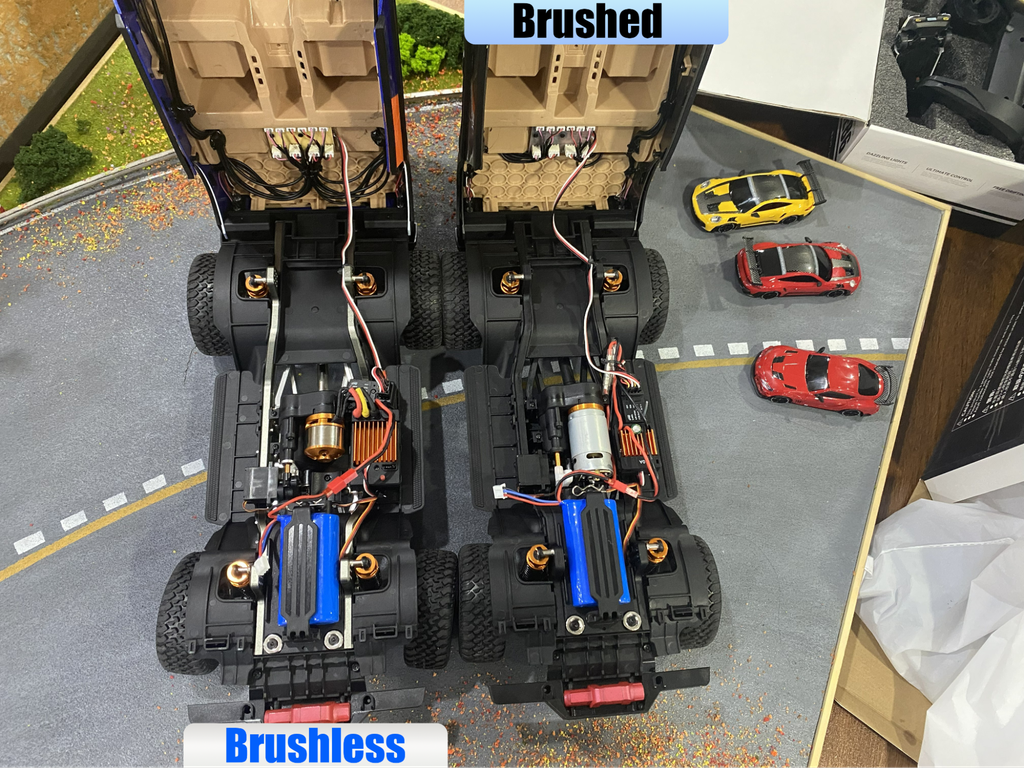
In a brushed vs brushless RC motor comparison, a brushless setup may use power more efficiently. It does not always give longer battery runtime.. A brushless system can use power more efficiently, but it does not always give longer battery runtime. Battery size, throttle use, terrain, gearing, and drivetrain resistance all affect how fast the battery drains. A larger battery may run longer, but full-throttle driving, rough terrain, unsuitable gearing, or tight drivetrain parts can drain the battery faster.
A gently driven brushed crawler may run longer than a brushless truck that is driven at full throttle again and again. Heat also depends on the full setup. Bad gearing, heavy load, tight drivetrain parts, or poor cooling can overheat both brushed and brushless systems.
Buyers should follow the manufacturer’s temperature guidance. No motor lasts forever, and a brushed motor also does not have one fixed lifespan. For retailers, it is better to check the replacement process and part number before making lifespan claims.
Brushed, Sensored or Sensorless: What Matters for RC Crawlers?
A brushed vs brushless RC motor comparison for crawlers should focus on smooth starts, low-speed control and braking.. A crawler needs predictable startup, controlled movement under load, and suitable braking more than a high top-speed number. This is why buyers should understand the difference between brushed, sensored brushless, and sensorless brushless systems.
A brushed setup can feel smooth at low speed when it is matched well. A conventional sensorless brushless system estimates rotor position from electrical feedback, so some systems can stutter or cog when moving slowly from a stop. A sensored brushless system sends rotor-position information to the ESC, which helps the ESC control startup more smoothly. Some controllers can also use sensored control at startup and then move to sensorless running, but this depends on the exact motor and ESC combination.
Modern crawler-focused systems can add more control features. For example, some integrated motor and ESC systems use field-oriented control, or FOC, to improve crawler throttle response. Buyers should evaluate the named motor and ESC system and its real driving behavior instead of assuming every brushless setup behaves the same way.
When evaluating a sample crawler, check slow starts, reversing, controlled descents and movement over obstacles. Record the battery and settings used. JXC’s RC off-road crawler wholesale guide provides broader context on crawler vehicle selection.
Can You Upgrade a Brushed RC Car to Brushless?
Many hobby-grade platforms can be converted, but an upgrade is not guaranteed for every vehicle. Compact RTR models may have integrated receiver/ESC electronics, limited space, or components intended for the original power system.
A standard brushed-only ESC cannot drive a conventional three-wire brushless motor. Some controllers support both types in different modes; confirm the manufacturer’s instructions rather than assuming compatibility.
Before ordering an upgrade, check motor diameter and length, mounting pattern, shaft size, pinion fit, ESC voltage and current limits, battery compatibility, connectors, receiver connections, drivetrain capacity, and cooling.
Your brushed vs brushless RC motor comparison should include the full upgrade cost. Check the cost of changing the motor, ESC, receiver, battery and drivetrain. Compare that total with buying a suitable factory-built brushless vehicle.
Which Motor Type Should Wholesale Buyers Stock?
Wholesale buyers should base their brushed vs brushless RC motor choice on customer use, selling price and spare parts support.. The useful buying decision starts with how customers will use the RC car and how the product will be positioned. Motor type is only one part of the specification. It does not decide the full quality, performance, or commercial value of the vehicle.
Budget and casual-use customers
For budget or casual buyers, a brushed model can still make sense if it drives well for the intended use and spare parts are easy to replace.
Performance-focused customers
Brushless model gain higher performance potential or a clearer upgrade path, it is essential to check the compatibility of the battery. Additionally, reaching the manufacturer’s advertised performance often requires specific optional equipment or accessories.
Crawler and scale-driving customers
For crawlers, focus first on control, braking, gearing, and spare parts support. A brushless system should not automatically be treated as the premium choice. Compare a brushed setup and a crawler-focused brushless setup by testing real samples and seeing how each one drives at low speed.
For customers buying their first vehicle, manageable speed and useful throttle settings matter more than the label alone. A suitable speed-limited brushless model may also be approachable. JXC’s entry-level vs hobby-grade RC cars guide discusses the wider product-category decision.
A Sample-Order Checklist for Retailers
Before committing to a bulk order, verify these points on the actual model:
- Use this brushed vs brushless RC motor checklist to test samples before placing a bulk order:
- Run the vehicle in the environment it is made for, such as crawler terrain, smooth road, or indoor use.
- Check how easy it is to reach the motor, wiring, and replaceable parts.
- Confirm the replacement SKUs, instructions, and parts ordering process.
- If you compare two samples, note the battery, gearing, weight, and driving conditions for both.
- Use these notes to make a better buying decision, but do not call it a controlled motor-efficiency test unless the test properly separates those variables.
Frequently Asked Questions
Are brushless RC motors better than brushed motors?
Buyers should base their brushed vs brushless RC motor choice on customer needs. Brushed motors can suit buyers who want a lower price, moderate performance and easy replacement. Brushless motors can offer more performance potential and avoid brush-related maintenance. Check the full vehicle and its intended use before choosing.
Do brushless RC motors need maintenance?
Brushless motors do not need brush replacement, but users should still check bearings, connectors, sensor cables, and cooling areas. Users should follow the product’s cleaning and maintenance instructions.
Are brushless RC motors waterproof?
The motor label does not prove that the full RC car is waterproof. Buyers should check the motor, ESC, receiver, and other electronics separately. Users should also follow the maker’s care instructions after wet driving.
Should a wholesaler stock only brushless RC cars?
No. One motor type does not fit every price point or customer. Wholesalers should build the product range around customer use, full specifications, and after-sales support.