
Introduction
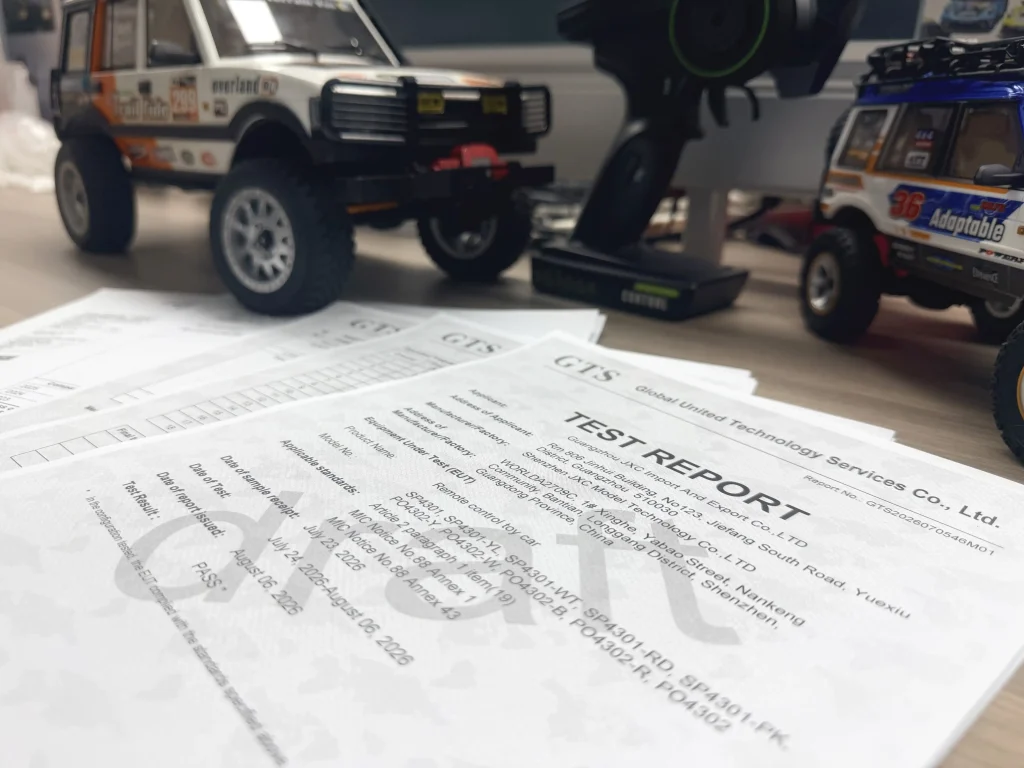
RC toy certifications for EU market entry are not optional paperwork—they’re the difference between a smooth shipment and a costly customs hold. We’ve seen distributors lose shipments at EU ports. We’ve watched retailers face fines they never saw coming. At JXC Model Technology, our LC80 1/12 RC crawler and full RC car line ship to distributors across Germany, France, the UK, and the Netherlands, and every single unit carries full EU compliance documentation.
In this guide, we’ll break down the EU Toy Safety Directive and the three certifications that matter most: CE marking, EN71, and RoHS. We’ll explain what each one covers, why customs officers check them, and what happens when they’re missing. You’ll also learn our step-by-step process for verifying supplier compliance before you ever place an order.
The EU Toy Safety Directive: What It Actually Means for RC Importers
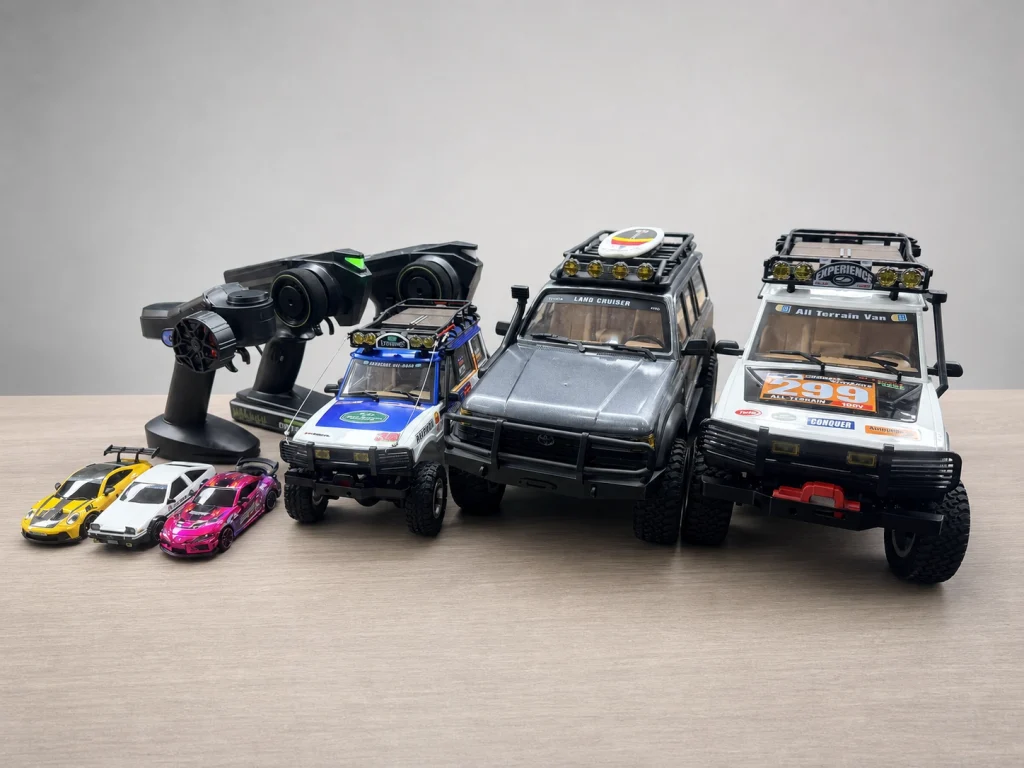
Understanding RC toy certifications for EU market compliance starts with the EU Toy Safety Directive 2009/48/EC, which governs every toy sold inside the European Union. It applies to RC cars, remote controllers, batteries, and charging cables. If your product falls under this directive — and every RC toy does — you need proof of compliance before your shipment ever leaves the port.
Here’s what trips up many new distributors. The directive doesn’t just apply to finished toys. It covers spare parts, replacement batteries, and even packaging materials that children under 14 might handle. Our engineers at JXC Model map every component against this directive before production starts. We caught a non-compliant battery label on one of our LC80 crawler batches two years ago. We halted the line, fixed the issue, and reprinted 12,000 labels. That batch cleared Dutch customs in 48 hours.
The directive requires three things from every importer. First, you must carry a valid EU Declaration of Conformity. Second, you need technical documentation proving your product passed safety testing. Third, your product must carry the CE mark visibly on the packaging or the toy itself. Missing any one of these three elements gives customs officers the right to detain, test, or destroy your shipment at your expense.
The directive also bans 55 specific chemicals from toys, including certain phthalates and heavy metals. RC cars contain plastics, paints, and electronic components. Each material must pass chemical safety testing. We test every plastic blend and paint batch at our factory before assembly begins. One distributor told us he switched to JXC Model after his previous supplier’s paint failed a German lab test. That failure cost him a €4,200 testing bill and a six-week delay.
CE Marking, EN71, and RoHS: What Each Certification Covers
Let’s clear up a common confusion about RC toy certifications for EU market products — CE, EN71, and RoHS are not interchangeable terms. CE marking is not a certificate you buy from a lab. It’s a declaration that your product meets all applicable EU directives. For RC toys, that means the Toy Safety Directive plus the EMC Directive and the Radio Equipment Directive if your remote uses radio frequencies. The CE mark belongs on your product, your packaging, and your user manual.
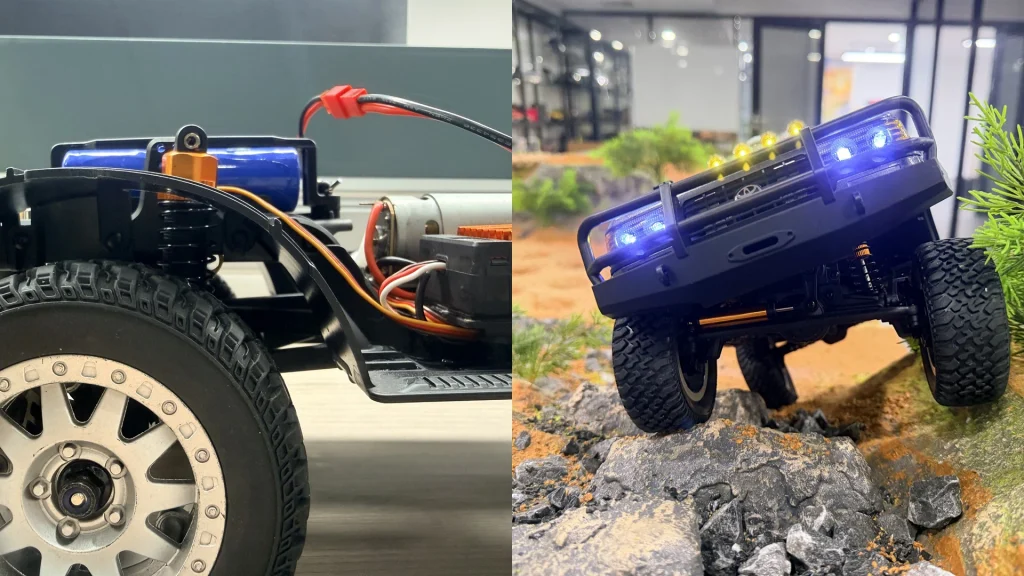
EN71 breaks into three parts that every RC distributor should understand. EN71-1 covers physical and mechanical safety. It tests small parts, sharp edges, and projectiles. For RC cars, this means wheel nuts can’t detach easily, body shells can’t shatter into sharp pieces, and battery compartments need child-resistant closures. Our LC80 crawler uses a two-step battery latch that passes this test every time.
EN71-2 covers flammability. It limits how fast toy materials can burn. RC cars contain plastics, rubber tires, and electronic wiring. During testing, labs expose material samples to a small flame and measure burn rate. We’ve seen cheap RC cars fail this test because manufacturers used untested recycled plastics. At JXC Model, every plastic supplier must provide batch-level flammability reports before we accept deliveries.
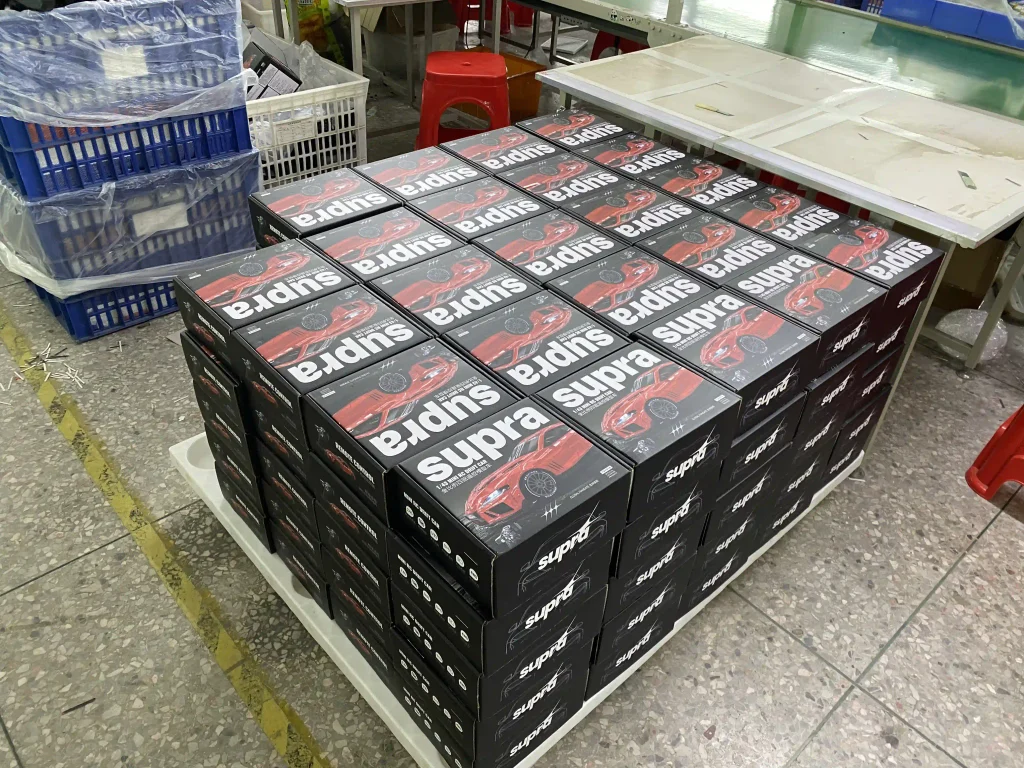
EN71-3 tests for migration of certain elements. It measures how much lead, cadmium, mercury, and other heavy metals can leach from toy materials. The limits are strict: 0.009% for lead in coatings, 0.003% for cadmium in plastics. We test our Supra drift cars against EN71-3 at two stages — raw material intake and finished product sampling. This double-check catches problems before they reach your warehouse.
RoHS Directive 2011/65/EU limits hazardous substances in electrical and electronic equipment. RC cars contain circuit boards, motors, and wiring. RoHS restricts lead, mercury, cadmium, hexavalent chromium, and four flame retardants. If your RC car’s circuit board contains leaded solder, it violates RoHS. We switched to lead-free solder across all JXC Model production lines in 2019. Our distributors haven’t faced a single RoHS-related detention since.
Beyond the EU, RC car certification requirements by country vary — our global certification guide breaks down what each major market demands.
What Happens When RC Toys Fail EU Compliance: Real Penalties
Let’s talk about what goes wrong when RC toy certifications for EU market shipments are missing or incomplete. In 2024, a UK-based toy distributor imported 800 RC cars from an uncertified Chinese factory. The shipment reached Felixstowe port without proper CE documentation. UK Border Force detained the goods for testing. The cars failed EN71-3 for lead content in the paint. Customs ordered the entire shipment destroyed. The distributor lost the $14,800 product value plus £3,200 in testing and disposal fees. His retailer canceled a follow-up order worth €22,000.
The financial hit was only half the damage. UK authorities published a product safety alert naming his company. That alert lives permanently on the UK government website. Future customs checks on his shipments now trigger automatic enhanced inspections. His shipping costs rose 18% because every container gets pulled aside. One missing certificate turned into a permanent business handicap.
Germany runs some of the strictest toy enforcement in Europe. In 2023, Bavarian market surveillance officers inspected 120 RC toys from online sellers. They found 34% lacked proper conformity documentation. Sellers faced immediate sales bans, product recalls, and fines up to €100,000 per violation under the German Product Safety Act. Even small distributors selling through Amazon.de received fines between €5,000 and €15,000.
France adds another layer. French customs can hold non-compliant shipments for up to 30 days while they run tests. Storage fees run €80 to €150 per day per container. One distributor we spoke with paid €2,800 just to store a detained shipment while waiting for test results. The tests failed. He paid another €1,200 for disposal. His total loss on a €6,000 order reached €4,000 before he sold a single unit.
Intellectual property adds a second risk. EU customs officers check for counterfeit branding alongside safety compliance. If your RC car carries a Toyota or Mitsubishi design without proper licensing, customs treats it as a counterfeit product. Penalties multiply. In 2024, EU customs seized over 86 million counterfeit items at borders. Toys ranked among the top five categories. Every JXC Model product carries officially licensed IP from Toyota and Mitsubishi. Our distributors pass both compliance and IP checks without delay. If you also sell in the US market, the three documents you must have for US certification differ from EU requirements — our guide covers both.
How European Distributors Can Verify Supplier Compliance Before Ordering
You can avoid every scenario above by verifying RC toy certifications for EU market compliance with four simple checks before you place your first order.. These checks take under an hour total. They could save you tens of thousands of euros.
Step 1: Request the EU Declaration of Conformity
Ask your supplier for a signed EU Declaration of Conformity for the exact product model you plan to order. The declaration must name the product, list the applicable directives, and include the manufacturer’s address and authorized representative in the EU. Generic templates with blank fields are red flags. At JXC Model, every declaration is product-specific, signed, and dated.
Step 2: Verify the EN71 Test Reports
Ask for third-party EN71 test reports from an accredited laboratory. Check that the report covers EN71-1, EN71-2, and EN71-3. Verify the lab appears on the EU NANDO database. Cross-check the product name and model number on the report against what you’re actually ordering. One distributor told us he received EN71 reports for a different model than the one shipped. That mismatch cost him a customs detention.
Step 3: Confirm RoHS Compliance Documentation
Request a RoHS compliance certificate or test report for the electronic components. The report should cover circuit boards, motors, wiring, and batteries. Ask whether the supplier uses lead-free solder. If they can’t answer clearly, that’s a warning sign. We’ve maintained lead-free production since 2019 and provide batch-level RoHS certificates on request.
Step 4: Check for Official IP Licensing
If the RC car carries a real car brand like Toyota or Mitsubishi, ask for the IP licensing agreement or authorization letter. Verify the license covers the regions where you plan to sell. Unlicensed products face confiscation at EU borders plus potential civil lawsuits from brand owners. JXC Model holds official licenses from Toyota for our Supra drift line and from Mitsubishi for our Delica retro line. We share licensing documentation with every distributor partner.
These four checks filter out roughly 80% of non-compliant suppliers. The remaining 20% will show you real documentation. That’s your shortlist. We encourage every potential JXC distributor to run these checks on us. We send full compliance packets within 24 hours of request. It’s not extra service. It’s the baseline for doing business in Europe.
Frequently Asked Questions
Do I need separate RC toy certifications for EU market countries individually?
No. CE marking and EN71 certification apply across all 27 EU member states plus the UK, Iceland, Norway, and Switzerland. One valid certificate covers the entire European Economic Area.
How long does EN71 testing typically take?
Third-party EN71 testing takes 7 to 14 business days for a complete RC car. Rush testing costs 30% to 50% more. At JXC Model, we maintain current EN71 certificates on all active products. Our distributors never wait for testing.
Can I sell RC cars in the UK with EU CE marking?
Yes, for now. The UK accepts CE-marked toys until December 31, 2027. After that, the UKCA mark becomes mandatory. We already include both CE and UKCA markings on products bound for British distributors.
What if my supplier claims CE marking but won’t show me the certificate?
Treat this as a hard stop. Any legitimate manufacturer can produce conformity documentation within 24 hours. At JXC Model, we send complete certification packets before sample shipments. No documentation means no order.
Does RoHS apply to RC car batteries?
Yes. RoHS covers all electrical and electronic equipment including batteries and chargers. Batteries must also comply with the EU Battery Directive for labeling and recycling requirements. Our battery packs carry both RoHS and Battery Directive compliance markings.
JXC Model EU Compliance
JXC provides the full EU compliance documentation for every RC model we export: CE marking under the Radio Equipment Directive (RED 2014/53/EU), RoHS and REACH declarations, EN 71 and EN 62115 toy safety certificates, and UN 38.3 battery transport reports.
Request the complete RC toy certifications for EU market compliance pack with your quote, then run the four verification steps above against it. Every document is there—no missing files, no surprises at customs, no last-minute delays.